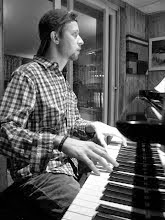
Recently I was having a discussion with a younger bassist about a gig we played a few months ago. I was focusing primarily on my enjoyment of playing music that night. Just to update those of you reading this blog I have 2 young children and a demanding day gig teaching at McGill University and Vanier College. Needless to say I feel like someone who is always making the food but rarely gets to taste it if you catch my drift. A good day for me is when I can get even an minimal amount of practicing in before I need to clean up, give baths, read bedtime stories. All the stuff I really love to do as a parent. Anyway my young bassist friend was focusing the conversation primarily on the mistakes. And in particular those instances where I played certain chord changes that were unfamiliar to him and there were moments that clashed between the chord I was playing and the bass note. These sorts of things often crop up in inter-generational moments like when a younger musician is playing a standard with an older musician. They often just know different chord progressions to the tunes because they've had different teachers for the music.
For example several of the standards I know I learned from recordings of Miles Davis and in particular the 60's quintet with one of my big heros Herbie Hancock. For sure as a student I would always be looking for places to put my favorite Herbie-isms. Here is one that I always wanted to do on "All of You" by Cole Porter. Check out the decending dominant sus chords in measures 13-16 of the form:
I'm sure if you're a jazz pianist this passage absolutely makes your eyes water with envy for Herbie's moment of superlative slickness. Well the whole solo is just about as great a herbie solo as it comes. It was even transcribed by Bill Dobbins in his seminal publication of Herbie Hancock solos published by Advance Music.(Just as an aside: a couple of years back I bought the box set "Miles Davis: Seven Steps to Heaven" and found to my utter amazement that the Herbies solos from these live concerts with the band that included George Colleman were heavily edited to remove entire choruses. When I heard these missing choruses put back into the solos it was like going to going to sleep and waking up in some kind of paralell universe like Bizzarro jazz world in the DC comics if that ever were to have been imagined. The previous Youtube clip plays the recording with the solo restored and not what was on the original cd)
Ok so I got the chance to play with Dave Young, veteran Toronto bassist, a number of years back and here's what those bars sounded like:
In Burrell's version this passage is:
EbMaj7 (Db7) Gmin7(b5) C7(b9) Fmin7 Bb7
which more closely resembles the original changes to the tune as opposed to the Miles/Herbie chords which are:
Eb7sus D7sus Db7sus C7sus B7 EMaj7
In jazz it is quite common for different musicians to play the same tune with even far greater differences than these and make them work. In my opinion the question is not whether or not these differences constitute "mistakes" when played together but rather the question is how do these players play what amounts to unrehearsed repertoire and make it sound so "right". The first question is phrased in the negative, glass-half-empty approach (which I find a surprising number of musicians are willing to take) and the second question is phrased in a positive, glass-half-full, how-do-we-make-this-thing-work approach.
I suppose the analogy I often use for my students is when we hang with our friends socially. In this context we are constantly using language to express and riff off completely unrehearsed ideas. Someone brings up a concert they recently attended, an episode of "Curb your enthusiasm" (nerd!), gossip about a gig they were on. All of these "ideas" existed internally as emotions and concepts that needed a language for them to be expressed. These ideas also needed an audience or an interactive human outlet for them to be "performed". During their performance they grow to include influences from the subtle emotional subtext of the "hang". Things like the vibe in the room which is often humourous. Or maybe the subtext involes an inter-generational vibe like when we're with family. The point is that there is so much that goes into the expression of ideas through language.
The only mistake we can make in these situations is to not be completely present. Humans are just naturally sensitive to each other but we sometimes do things that get in the way. We feel insecure about ourselves and so we start an internal negative dialogue that has nothing to do with anything external. We use drugs that dull our minds. Music only sounds wrong when this sensitive exchange between people isn't happening. Yes understanding of language is a very important part and so is the quality of our ideas (typically you don't hang out with your friends to bore them with mundane ideas) but so is an attitude of open mindedness and a willingness to listen and respond honestly to one another. Possibly THE greatest thing about jazz and improvisation is that it rellies on conventions and languages that are the best at representing the subtlety of complex human interaction. The only time it sounds bad (not Shaft bad but yucky bad) is when that interplay isn't there. All the right notes in the world won't change a band that isn't happening!

Showing posts with label On the art of learning. Show all posts
Showing posts with label On the art of learning. Show all posts
Wednesday, November 30, 2011

Tuesday, November 15, 2011
Post Secondary Education: a purely politcal post
For those of you who read my blog you know about my increasingly sporadic posts. You've read my meandering theses on various topics relating to jazz education. You've been patient with me while I self-promoted, you've been open minded when I've ranted, you've been like a friend when I've gushed about my family. I'd now like to take the next step outside of the sphere of jazz education and write something briefly on education itself.
Here in Quebe where I live and work we are witnessing the beginning of the end of state funded post secondary education. Up until now we've literally been the most enlightened society in North America by subsidizing the greatest portion of university tuition than any other province in Canada or State in the US. This is something that I am unflinchingly proud of and I will gumb you down if you try to argue with me about this. I simply can't believe those people who argue against the benefit of post secondary education to society at large. Their arguments seem trite to me, similar to those arguments people make against society's responsibilities towards the rearing of children and young adults. Simply because those making the argument themselves have no children they feel that this should absolve them from playing a role in the shaping of the human beings they share the planet with and whose future financial, emotional, and intellectual contributions will be of great benefit to them when they require care in their old age.
I would like to take 2 arguements that are being thrown out against subsidized post secondary education by everyone from my neighbours to high profile economists and argue against them.
#1. is the argument that university education is primarily a personal choice that benefits the student only.
This is in essence a consumeristic attitude toward higher education and an argument recently articulated by an economist in the Montreal Gazette. There is more to highter education than mere personal choice or self-improvement. Nor is subsidizing tuition a mere investment in an individual's future income. Education does indeed improve the student, but it also produces graduates who are better able to contribute to the development of society at large. Society benefits from doctors, lawyers (supposed to, maybe I should say in Canada at least) engineers, philanthropist business leaders, theologans, ethicists, chemists, physicists, musicians, artists.....even economists!
#2 the argument that free education produces inferior education, citing the claim that "no German university is ranked among the best in the world," and suggesting that this is because most German states offer free university.
Setting aside the veracity of the claim, perhaps the authors of this argument could explain how Oxford and Cambridge managed to become such world reknowned universities in spite of the fact that, until recently, Britain also offered free higher education. McGill university itself is considered the top university in Canada and yet has one of the lowest tuitions. A policy offering low-cost or free higher education is a choice that many enlightened societies have made because they understand that it is an investment, not just in the individuals who receive that education, but in the ongoing development of of society as a whole.
This is a choice that the Quebec society made years ago. The trouble is that successive governments have not lived up to their side of the bargain by funding the universities adequately. And now the problem with Quebec universities is not that they charge such low fees, but that they receive inadequate support from the very governments that have set the low-fee policy. This paints an inaccurate picture of the issue for people. What is in the public's best interest is to push hard against the government to live up to the values and expectations of society, but instead people are adopting the values of cutting back on education. Cuts that themselves represent merely the values of a government who is doing everything it can to make up for bad policy and corruption in other sectors.
Here in Quebe where I live and work we are witnessing the beginning of the end of state funded post secondary education. Up until now we've literally been the most enlightened society in North America by subsidizing the greatest portion of university tuition than any other province in Canada or State in the US. This is something that I am unflinchingly proud of and I will gumb you down if you try to argue with me about this. I simply can't believe those people who argue against the benefit of post secondary education to society at large. Their arguments seem trite to me, similar to those arguments people make against society's responsibilities towards the rearing of children and young adults. Simply because those making the argument themselves have no children they feel that this should absolve them from playing a role in the shaping of the human beings they share the planet with and whose future financial, emotional, and intellectual contributions will be of great benefit to them when they require care in their old age.
I would like to take 2 arguements that are being thrown out against subsidized post secondary education by everyone from my neighbours to high profile economists and argue against them.
#1. is the argument that university education is primarily a personal choice that benefits the student only.
This is in essence a consumeristic attitude toward higher education and an argument recently articulated by an economist in the Montreal Gazette. There is more to highter education than mere personal choice or self-improvement. Nor is subsidizing tuition a mere investment in an individual's future income. Education does indeed improve the student, but it also produces graduates who are better able to contribute to the development of society at large. Society benefits from doctors, lawyers (supposed to, maybe I should say in Canada at least) engineers, philanthropist business leaders, theologans, ethicists, chemists, physicists, musicians, artists.....even economists!
#2 the argument that free education produces inferior education, citing the claim that "no German university is ranked among the best in the world," and suggesting that this is because most German states offer free university.
Setting aside the veracity of the claim, perhaps the authors of this argument could explain how Oxford and Cambridge managed to become such world reknowned universities in spite of the fact that, until recently, Britain also offered free higher education. McGill university itself is considered the top university in Canada and yet has one of the lowest tuitions. A policy offering low-cost or free higher education is a choice that many enlightened societies have made because they understand that it is an investment, not just in the individuals who receive that education, but in the ongoing development of of society as a whole.
This is a choice that the Quebec society made years ago. The trouble is that successive governments have not lived up to their side of the bargain by funding the universities adequately. And now the problem with Quebec universities is not that they charge such low fees, but that they receive inadequate support from the very governments that have set the low-fee policy. This paints an inaccurate picture of the issue for people. What is in the public's best interest is to push hard against the government to live up to the values and expectations of society, but instead people are adopting the values of cutting back on education. Cuts that themselves represent merely the values of a government who is doing everything it can to make up for bad policy and corruption in other sectors.
Wednesday, April 20, 2011
What Makes Music Expressive
I was really interested to see in the NY Times today (online edition) an article by Dan Levitin called "What Makes Music Expressive. Dan is the author of "Your Brain on Music" and runs the Laboratory for Musical Perception, Cognition, and Expertise at McGill University. I guess that makes him a neuroscientist. Where in the past I had never really found the types of explanations for the musical "experience" offered by neuroscientists to be very rewarding, Dan's book was different. First of all before becoming a neuroscientist he worked as a session musician, sound engineer, and record producer. According to his bio he's worked with a diverse array of artists including Stevie Wonder and Blue Oyster Cult. (more cowbell anyone?...) Before reading his book I actually didn't know anything about him other than the fact that he works in the same building as me and that he had already a fairly high profile when he joined the faculty at McGill. I did get into most of his book right away and many of his ideas and experiments have really piqued my own interest in the goings-on of the musician's brain. I guess it didn't surprise me when I found out that he had in fact this background as a musician which I think really grounds the research he does. I think the common ground here is that musicians are also intensely interested in the effects of music on the brain but we conduct our research using musical instruments and would prefer not to talk too much on the side. I liked this article because it demonstrates musical perceptions without too much talking. In a sense it lets the effect of music inside our own minds do the talking. Very cool. Enjoy!
http://www.nytimes.com/interactive/2011/04/18/science/20110419-music-expression.html
Click here for the full article/interview with Dan Levitin
Saturday, March 5, 2011
Respect yo - a follow up
I've received many comments on my Patitucci clinic post both in person and on my blog. I have been intending to post my little retraction about how I said the bass player involved in my description of the events that day was in first year. Yes people have corrected me several times. I didn't think this was such a big deal! To me from my very "older" perspective the difference between a first year student and a second year student isn't really that big so I hadn't intended it as a slur. But I must admit when some students corrected me at school last week I was like "really he's in second year already?" So kids the moral is that when you get to be this old time just whizzes by you.
But in all seriousness I read my post again and the fact that I referred to him as being in first year does give my comments a bit more of a glib vibe than I intended. Saying that he "kicked" Steve off the piano implied that he was trying to be rude to Steve when really he was quite unintentionally rude. But rude nonetheless. I sensed a rigidity from the student in that situation which I read as attitude when it was probably more nerves than anything else. For that I apologize. It was never my intention to shame anyone. I don't think anyone needed to feel shame in that situation. I was hoping that we could all learn from an example of attitudes and approaches to learning that we ALL experience.
I found it very interesting that a great player like Patitucci had no problem calling students on their attitudes with both directness and respect. I would like to say that, personally, I have had great teachers call me on my attitudes. They were tough medicines to take but somehow I managed to get over myself in those situations and learn from them. With my post I was giving the same message to the students of McGill that I have had to learn for myself: "get over yourself because your ego is getting in the way of your love for music and your desire to be a musician!" The fact is that those students had nothing to be ashamed about and were exceedingly lucky to have had a teacher like John Patitucci that day. I was only disappointed when they left the clinic early because they missed some really great playing!
I know when you are younger this situation can feel harsh. However learning situations like this can be an instrumental turning point in a musician's development. The history of jazz is replete with stories of "attitude adjustments" for developing players. Just read the Miles Davis autobiography to hear about some of his experiences both in the receiving and the giving of attitude adjustments. When I was a student I remember how a even just a few choice words from Andre White or Jan Jarcyk could literally change my life. And then when I got to take lessons with Kenny Werner and Fred Hersch (with whom I'm still studying) I grew so much as a person and a pianist. But talk about an attitude adjustment with Fred. Let's just say he'll eat you alive if you show up in his loft and play a standard without knowing the lyrics. A lesson with Fred will undoubtedly ruffle your feathers. Just ask Brad Mehldau, or George Colligan. Fred won't mince words in order to get his point across about your technique or gaps in your knowledge. If you can't get passed yourself in these situations it will be very difficult to learn from them.
Guys, there is nothing I take more seriously than my students' desire to grow and develop as people and musicians. And I would really hope that if you were to ask any of my piano or arranging students that they would say that my comments and criticisms come from a place of love. However as a teacher I do comment and criticize. And I hope that I dole out my "teaching" in a way that I would want to be taught myself. I don't see any way that I can call someone on their attitude without ruffling some feathers. I just can't "not" do it because it might hurt some feelings. But let me tell you from experience that you can't put it on the line as a musician and go out and do the thing that most people in the world will admire you for when you succeed and not experience hurt feelings along the way. It's part of the investment for the enormous return (not so much financially but personally, spiritually) that you get from being a musician. Trust me the hurt feelings from a clinic at McGill where all your friends are cheering you on is nothing compared to hurt feelings on the bandstand or hurt feelings from getting fired from a professional engagement. I've blogged about my encounters with these I hope in an open way that reveals what I've had to learn myself on the topic of humility.
This was my point when I used terms like "badass" because for me they represent a real and direct way of dealing with this particular attitude. My intention was not to use "badass" as a put down. I'm sure I've actually used to the word more as a complement as in "That was badass!" I intended it to be more humorous as when I compared "badass" to "assbad" which is something I feel about myself after almost every recording I make! My sense of the word "badass" is something that we're all trying to be. Meaning that we want to play at a high level, one which sounds... well, "Badass!"
I can't very well fault anyone for wanting to play their best. But I can point out where one's DESIRE to play their best isn't the point of a clinic with John Patitucci. We weren't there to see how great the bass players of McGill sound (although I have to say there were some really strong players which was a joy to listen to) and impress our friends with our playing. That can be done on any day of the week. We were there to hear from John Patitucci and for those lucky bass players to get a chance to play with and learn from Steve Amirault while receiving direct instruction from Patitucci. Wow! Now that won't happen any day of the week.
The fact that I got a key detail wrong in my original post about what year the bass player was in undermined the credibility of my comments in that it made me sound like I didn't know or care about the students involved. Believe me nothing could be further from the truth and thanks for calling me on it! I hope you'll continue to read and comment on my blog.
But in all seriousness I read my post again and the fact that I referred to him as being in first year does give my comments a bit more of a glib vibe than I intended. Saying that he "kicked" Steve off the piano implied that he was trying to be rude to Steve when really he was quite unintentionally rude. But rude nonetheless. I sensed a rigidity from the student in that situation which I read as attitude when it was probably more nerves than anything else. For that I apologize. It was never my intention to shame anyone. I don't think anyone needed to feel shame in that situation. I was hoping that we could all learn from an example of attitudes and approaches to learning that we ALL experience.
I found it very interesting that a great player like Patitucci had no problem calling students on their attitudes with both directness and respect. I would like to say that, personally, I have had great teachers call me on my attitudes. They were tough medicines to take but somehow I managed to get over myself in those situations and learn from them. With my post I was giving the same message to the students of McGill that I have had to learn for myself: "get over yourself because your ego is getting in the way of your love for music and your desire to be a musician!" The fact is that those students had nothing to be ashamed about and were exceedingly lucky to have had a teacher like John Patitucci that day. I was only disappointed when they left the clinic early because they missed some really great playing!
I know when you are younger this situation can feel harsh. However learning situations like this can be an instrumental turning point in a musician's development. The history of jazz is replete with stories of "attitude adjustments" for developing players. Just read the Miles Davis autobiography to hear about some of his experiences both in the receiving and the giving of attitude adjustments. When I was a student I remember how a even just a few choice words from Andre White or Jan Jarcyk could literally change my life. And then when I got to take lessons with Kenny Werner and Fred Hersch (with whom I'm still studying) I grew so much as a person and a pianist. But talk about an attitude adjustment with Fred. Let's just say he'll eat you alive if you show up in his loft and play a standard without knowing the lyrics. A lesson with Fred will undoubtedly ruffle your feathers. Just ask Brad Mehldau, or George Colligan. Fred won't mince words in order to get his point across about your technique or gaps in your knowledge. If you can't get passed yourself in these situations it will be very difficult to learn from them.
Guys, there is nothing I take more seriously than my students' desire to grow and develop as people and musicians. And I would really hope that if you were to ask any of my piano or arranging students that they would say that my comments and criticisms come from a place of love. However as a teacher I do comment and criticize. And I hope that I dole out my "teaching" in a way that I would want to be taught myself. I don't see any way that I can call someone on their attitude without ruffling some feathers. I just can't "not" do it because it might hurt some feelings. But let me tell you from experience that you can't put it on the line as a musician and go out and do the thing that most people in the world will admire you for when you succeed and not experience hurt feelings along the way. It's part of the investment for the enormous return (not so much financially but personally, spiritually) that you get from being a musician. Trust me the hurt feelings from a clinic at McGill where all your friends are cheering you on is nothing compared to hurt feelings on the bandstand or hurt feelings from getting fired from a professional engagement. I've blogged about my encounters with these I hope in an open way that reveals what I've had to learn myself on the topic of humility.
This was my point when I used terms like "badass" because for me they represent a real and direct way of dealing with this particular attitude. My intention was not to use "badass" as a put down. I'm sure I've actually used to the word more as a complement as in "That was badass!" I intended it to be more humorous as when I compared "badass" to "assbad" which is something I feel about myself after almost every recording I make! My sense of the word "badass" is something that we're all trying to be. Meaning that we want to play at a high level, one which sounds... well, "Badass!"
I can't very well fault anyone for wanting to play their best. But I can point out where one's DESIRE to play their best isn't the point of a clinic with John Patitucci. We weren't there to see how great the bass players of McGill sound (although I have to say there were some really strong players which was a joy to listen to) and impress our friends with our playing. That can be done on any day of the week. We were there to hear from John Patitucci and for those lucky bass players to get a chance to play with and learn from Steve Amirault while receiving direct instruction from Patitucci. Wow! Now that won't happen any day of the week.
The fact that I got a key detail wrong in my original post about what year the bass player was in undermined the credibility of my comments in that it made me sound like I didn't know or care about the students involved. Believe me nothing could be further from the truth and thanks for calling me on it! I hope you'll continue to read and comment on my blog.
Tuesday, February 8, 2011
Montreal Musicians II: Dave Laing
Dave is one of the premiere jazz drummers in the country. He's played with everyone from Jimmy Heath to Barry Harris to John Stetch. As a student at McGill in the 90's I would watch the local heavy weight bands of Kevin Dean and Andre White perform at Upstairs giving us all something to aspire to. Dave was and is such an important part of the top Montreal rhythm sections that it was with almost trembling fingers that I called him up on the phone in 1998 to play on a recording session of mine. After nearly 10 years of working with Dave in Montreal and being so totally schooled in feel and musicality every time I've had the chance to play with him I'd like to say that I've almost achieved on my instrument what Dave can do on the drums. Like I said I'd like to say that. Laing is one of those musicians who bring up the level of anyone he's playing with it's so easy to feel that one can really swing hard when they play music with him. Here's Dave playing with Min last year at Upstairs.
Friday, January 21, 2011
Respect yo
For the past 2 days John Patitucci has been a resident clinitian at McGill University. I, like most students, found him to be equally enlightening as a speaker as he is a player. Patitucci was really candid and warm with the students but he also called them on a few things relating to respect which I found had a profound teaching for us.
 All the clinics started early and he seemed absolutely raring to get going. However, as with many university events, the steady stream of latecomers would trickle in for the next 15 minutes or so after the designated start times. It was clear by the second clinic yesterday that this didn't sit well with Patitucci who actually stopped speaking everytime someone walked in and took the time to tell that person that it was disrespectful for them to show up late. He didn't push it further and he also didn't seem to be angry or distressed. He was just as straight-up about talking about respect as he was about talking about time or chord changes. It was just disrespectful and that was it. Teaching given.
On another occasion the student bass players were invited to play duo with Montreal's veteran pianist Steve Amirault and then receive criticism. Every bass player quickly found a tune to play with Steve and then got about their business. Some with more or less trouble due in part to the lack of drums. I don't think there wasn't a person in the room who wasn't sympathetic to the challenges of 2 musicians playing together without a drummer. As any of you who have already tried playing duo, this playing situation quickly exposes weeknesses and gaps. Only one student called a tune that Steve didn't know. It was a standard. However instead of finding another tune he kicked Steve off the piano only to replace him with a student pianist. Needless to say if there is only one standard out there which is going to make or break you it is a pretty sure sign that you're going to be in trouble in a duo situation. And of course they quickly train wrecked. In fact Patitucci quickly stopped them and laid it out bare for them to learn from their mistake.
"If you call a tune with an older player and he doesn't know it... you call another tune!"
Now maybe the first year bassist was put off by Steve and was nervous to play with him. Or perhaps that one tune was the one and only standard he knew by heart and had never tried playing tunes from memory before or sat in at a jam session. Either way it didn't seem interesting to try to play with an older more experienced player. It was somehow only important that that particular tune be played. I also noticed that both the student bass player and the student pianist left the clinic before the end when Patitucci played duo with Amirault for about 20 minutes. That was an education in playing duo and really a great chance to listen and learn given the context of the workshop.
I guess this gets to the heart of what learning is all about. There aren't a lot of situations these days when character traits such as humility and respect will actually translate into direct gains for a person. It seems to me that in most situations we are constantly trying to figure out what we can get out of it. If we do something, anything from watching tv to having a relationship, everything is done with the implicit econonmic directive: "What's in it for me?". I must admit as a tax payer I'm often yelling that question at my bills. What is problematic about this modus operandi is that it doesn't take into consideration what we need to give sometimes in order to really make growth happen. As human beings who are also jazz musicians we all want to be bad-asses. And sometimes we don't want to peer over the precipice for fear of falling. Our egos don't want us to fall because that would mean we would need to change our self-identity from "bad-ass" to "ass-bad!"
Is this an attitude that will help one learn and develop musically? Isn't playing at a really high level the surest way of insuring one's own "badassness"?
And this is another things that's great about jazz music: sometimes when we least expect it music, as it uniquly has the capacity to do, can teach us the value of humility and respect.

On another occasion the student bass players were invited to play duo with Montreal's veteran pianist Steve Amirault and then receive criticism. Every bass player quickly found a tune to play with Steve and then got about their business. Some with more or less trouble due in part to the lack of drums. I don't think there wasn't a person in the room who wasn't sympathetic to the challenges of 2 musicians playing together without a drummer. As any of you who have already tried playing duo, this playing situation quickly exposes weeknesses and gaps. Only one student called a tune that Steve didn't know. It was a standard. However instead of finding another tune he kicked Steve off the piano only to replace him with a student pianist. Needless to say if there is only one standard out there which is going to make or break you it is a pretty sure sign that you're going to be in trouble in a duo situation. And of course they quickly train wrecked. In fact Patitucci quickly stopped them and laid it out bare for them to learn from their mistake.
"If you call a tune with an older player and he doesn't know it... you call another tune!"
Now maybe the first year bassist was put off by Steve and was nervous to play with him. Or perhaps that one tune was the one and only standard he knew by heart and had never tried playing tunes from memory before or sat in at a jam session. Either way it didn't seem interesting to try to play with an older more experienced player. It was somehow only important that that particular tune be played. I also noticed that both the student bass player and the student pianist left the clinic before the end when Patitucci played duo with Amirault for about 20 minutes. That was an education in playing duo and really a great chance to listen and learn given the context of the workshop.
I guess this gets to the heart of what learning is all about. There aren't a lot of situations these days when character traits such as humility and respect will actually translate into direct gains for a person. It seems to me that in most situations we are constantly trying to figure out what we can get out of it. If we do something, anything from watching tv to having a relationship, everything is done with the implicit econonmic directive: "What's in it for me?". I must admit as a tax payer I'm often yelling that question at my bills. What is problematic about this modus operandi is that it doesn't take into consideration what we need to give sometimes in order to really make growth happen. As human beings who are also jazz musicians we all want to be bad-asses. And sometimes we don't want to peer over the precipice for fear of falling. Our egos don't want us to fall because that would mean we would need to change our self-identity from "bad-ass" to "ass-bad!"
Is this an attitude that will help one learn and develop musically? Isn't playing at a really high level the surest way of insuring one's own "badassness"?
And this is another things that's great about jazz music: sometimes when we least expect it music, as it uniquly has the capacity to do, can teach us the value of humility and respect.
Saturday, January 8, 2011
Setting goals Part I
Goals are a huge part of our Western culture. I must admit that I am myself an avid goal setter. At least I've used goal setting as a technique to accomplish lots and lots of stuff. Recently though, in the last 3 years or so, I think my goal addiction has been subdued into making lists. I have lists now... lots and lots of lists.
Goals are the focus of every credible self-help program. Stephen R. Covey's seminal book Seven Habits of Highly Effective People devotes habits 2 and 3 to goal setting:
Goals are the focus of every credible self-help program. Stephen R. Covey's seminal book Seven Habits of Highly Effective People devotes habits 2 and 3 to goal setting:
Habit 2: Begin with the End in Mind
Synopsis: Self-discover and clarify your deeply important character values and life goals. Envision the ideal characteristics for each of your various roles and relationships in life.
Habit 3: Put First Things First
Synopsis: Planning, prioritizing, and executing your week's tasks based on importance rather than urgency. Evaluating if your efforts exemplify your desired character values, propel you towards goals, and enrich the roles and relationships elaborated in Habit 2.
Goals are an enormous part of just about every useful bit of self-help technology out there. Consider this interesting presentation at a recent TED conference:
Both of the above examples of goal setting techniques have the effect of completely jazzing me up. My heart races with the thoughts of what I could accomplish with my life and how happy and fulfilled my accomplishments would make me feel. My palms start sweating when I hear "don't tell anyone your goals" and I think to myself : "that's it! The key to my success! I need a coffee. This is amazing. I need a coffee!...
Oh yeah, that's the stuff.
I love Covey's book. I'd really love the chance to go to a TED conference. However my own personal experience leads me to question the simplistic assertion that goals are what life is all about. My own dabblings in Shambahla Buddhist training makes me ask the question: Are ACCOMPLISHED people are always HAPPY people?
To be fair Covey's book also makes it a habit to be constantly tweaking your goals so that they reflect the person you are as you grow and develop. As such his idea of goals are pretty malleable. His goals are oriented towards relationships just as much as they are task accomplishment. Yet it seems to me very culturally reinforced that the achievement of tasks are what we admire the most in the west. We admire the accomplishment and loath the failure associated with career success much more publicly than, say, our accomplishments in raising children.
All I'm saying is that sometimes the harder we try to do some things the worse they get. Like when I try to play really swinging jazz or a really great solo I usually don't. But when I back off and let whatever might happen to happen that's usually when something interesting takes place. In a sense that's when my goals in music making seem the most fulfilled. Because while on the one hand my ego has a vested interest in playing great and being successful, my creative mind feels the most suppressed by my ego's desires. They are desires not based in the fulfillment of creativity but in the fulfillment of goals.
Imagine going to a party with friends and having goals for how the party will go. Having a goal for the discussions you will have. Having a goal for the success of having fun. Even if each of your goals were met wouldn't you say that you missed out on an import aspect of that experience of human interaction and co-existence due to the imposition of your agenda? How much of our lives really exists on a plane of this nature. What if the the paradigm for our existence involved letting go more of our agendas and not holding so tightly to what we want to happen and trying instead to dance with the flow of energy that surrounds us. Would we still be able to accomplish things?
I'm not saying that we shouldn't set goals for ourselves and try to accomplish success in our careers. I will always have my lists of what I'm doing on a weekly, monthly and yearly basis. I just question if whether or not most of the goals we set for ourselves are to somehow create a sense of meaning for our lives. And on a greater scale we only end up cyclically repeating patterns that ultimately cause our own suffering. This is a poignant aspect of Buddhism and one which many in the west find it difficult to reconcile. And yet at the same time we see the truth in it. Perhaps it could be my next goal to have no goals....yikes!
Imagine going to a party with friends and having goals for how the party will go. Having a goal for the discussions you will have. Having a goal for the success of having fun. Even if each of your goals were met wouldn't you say that you missed out on an import aspect of that experience of human interaction and co-existence due to the imposition of your agenda? How much of our lives really exists on a plane of this nature. What if the the paradigm for our existence involved letting go more of our agendas and not holding so tightly to what we want to happen and trying instead to dance with the flow of energy that surrounds us. Would we still be able to accomplish things?
I'm not saying that we shouldn't set goals for ourselves and try to accomplish success in our careers. I will always have my lists of what I'm doing on a weekly, monthly and yearly basis. I just question if whether or not most of the goals we set for ourselves are to somehow create a sense of meaning for our lives. And on a greater scale we only end up cyclically repeating patterns that ultimately cause our own suffering. This is a poignant aspect of Buddhism and one which many in the west find it difficult to reconcile. And yet at the same time we see the truth in it. Perhaps it could be my next goal to have no goals....yikes!
Thursday, February 4, 2010
On the art of hair growth
Recently a piano student of mine emailed me for some encouragement. He asked me "I was wondering what you do when you don't like the way you sound on the piano?" This is definitively a question that most students have but few dare to ask. It's a good question for several reasons the most important of which I believe is that it goes to the heart of the reason why a musician makes music. It also says a lot about this student's attention to the process of becoming an accomplished musician.
There is a paradoxical nature to the pursuit of educating one's self to be a creative musician. When we're young many of us look at great jazz musicians and assume that the mind-blowing, creative sounds coming out of their instruments are being created entirely in the moment. Jazz, when it's really happening is so spontaneous, exciting, and off-the-cuff that it seems as if it is literally bursting out of the air molecules. For me the sign of maturity in a developing player is when they give up trying to be completely breath-takingly in the moment and develop an appreciation for the craft of being a musician. They begin to distill their creative musical ideas and work them over and over again refining both their ideas and the execution of their ideas. At this level of artistic evolution a student looks up to their mentors not only as "geniuses" but also as craftsmen (craftspeople?) and develops an appreciation for the refinement and taste that exudes in their playing. However the pursuit of the craft of music inevitably takes us through the thoroughfares of drudgery. The hours of practicing some very non-creative things as a way of unlocking our creativity seems paradoxical and it becomes easy to lose the energy and inspiration that initially was driven by this perceived spontaneity.
Acquiring the skills of a master can take a lot longer than we had initially hoped. Our practicing can seem even futile. It's almost as if we got up every day, stood in front of the mirror and tried to "will" our hair to grow. This would be a depressing way of growing one's hair and yet for many students (myself included) it becomes part of our process of developing our skills as a musician. It would be silly for any of us to obsessively wish we were at a different hair-length since worrying about it would have no effect on the process that is already occurring at its own rate. (incidentally we all grow hair at different speeds!) Hair length is also neither good nor bad. It's just shorter or longer. This is the same for our development as musicians. We are all developing at our own rates and it only serves to inhibit our development to use our limited energy judging ourselves.
Once when I took a lesson with Fred Hersch I asked a similar question to him. I don't remember exactly the words I used but I intimated the sentiment that I was often over-whelmed by the prospects of playing solo piano. Fred's answer was: "When you're playing music use what you know, not what you don't know". Over-simplistic as it seems this answer is profound because it requires one to be completely honest about what one "knows". This honesty is, in my experience, not very common and is what distinguishes the wheat from the chaff in terms of artistic integrity. Artistic intentions become quite transparent when it is clear that a musician is playing something that they don't grasp. It's innocent I know but it has the overall effect on the listener as music that is trying to be something that it is not; music that is perhaps trying to impress the listener by approximating something else rather than being simple and honest and what it is.
Younger players are often mired in judgmental decisions about the "hipness" of what they play. In the case of my student I find it heartening that he is perhaps beginning to dig deeper for a meaning to what he plays. As long as this feeling doesn't turn into obsessive self-loathing this question is an acknowledgment of the deeper sometimes darker places within that must be faced with courage and honesty as part of the process of becoming a musician.
 ɪdʒ
ɪdʒ

Monday, December 28, 2009
My reply to David Valdez
The following is my reply to David Valdez on the topic of jazz education producing a gluttony of jazz graduates who are ultimately to blame for the decline in the amount of work available for jazz musicians. I disagreed with this comment but we agree on a number of points and I encourage you to check out his excellent blog here.
Maybe I can jump back in again...
I think we're all reconciling in our own ways the sad truth that live music is just not very important to the public at large. Maybe we can agree that whatever it used to be, it was what it was a generation or two before any of us on this blog (I don't know for sure but I doubt the work available in the 70's and 80's could hold a candle to the constant need for dance bands in the 40's and 50's) Maybe I can try to explain my distinction between jazz education and being a professional musician in this context.
In my comment I disagreed with the assertion that the jazz music business is in peril as a result of numbers of students graduating from university jazz programs. I guess it is mostly because I don't really view university and the academic music streams as a form of trade school. As another commentator pointed out God help the student who'll try to pay off a degree at Berklee with jazz music as a career choice. At McGill the overwhelming majority of my students, as you've already pointed out, will dable in music professionally before moving on to pursue other more lucrative endeavors. And we both agree that this is a good thing. It's good because they will go on to make up an informed consumer of art and hopefully good music. I don't really feel threatened by their short presence in the "job market" I even encourage them to live the dream as long as possible. Most of the gigs my students play are not professional and I doubt that I'd lose any of my work to them (at least not for a couple of years...I've got to keep practising just in case!) If anything I get a lot of inspiration from hearing what younger players are coming up with as a result of their influences. Here's where perhaps another distinction is useful: Being an artist is not the same as being a success in the music business.
Being an artist requires intense mentoring, participation in a community of like minded musicians, and a lifetime of work mastering the technical aspects of one's instrument and one's own musical language. Success in the music biz requires one to have skills relevant to the needs of contemporary society. When people used to dance to music, they depended on musicians and live music in a way that they do not today. When people stopped dancing to jazz (whether the music changed or the public's entertainment needs changed is still up for debate) then live music began its steady decline. Some "artists" are a success in the biz (Mehldau for example) but I can't really explain why. I also know personally of several world-class musicians who are hard-pressed to earn the money they deserve and must supplement their income with teaching. Conversely I think we could all name a few mediocre players who are absolutely striking it rich in the biz. However as a teacher at the university level I would never steer anyone away from their dreams but rather I let life just kind of work itself out in this regard. It takes an enormous amount of dedication to make a go of it and if a person has that dedication they will do it anyways regardless of what I tell them.
So ultimately I don't really think it's possible to teach this dedication. And I believe that dedication is the key to becoming an artist. So in a way I don't even think it's possible to really "teach" artistry. I think the closest I could come would be to tell students that if they want to work they should start thinking about becoming team players. For me that meant learning how to accompany as well as I could (let's face it, it's what a pianist does %90 of the time to pay the bills) But this decision was a result of my own experience mentoring piano players in Montreal and New York and not so much a result of my classwork in composition, improv, and arranging. I am very fortunate that I can fund my own creative projects and discover my own artistic voice with the work I get as a sideman playing (ahem) sometimes less creative gigs (no offense to anyone in Montreal, I love you all! I'm just talking about the jobbing gigs)
The best argument I give students to finish their degrees are if they love learning and if they want to teach (you could potentially earn with a masters degree $100/hr teaching in a university instead of $14/h teaching at the local music store). These are valid reasons for getting a degree neither of which will guarantee any success in the field of performance. But you're right David we as teachers need to impart clearly what a student is and isn't getting as part of their university education.
Saturday, December 5, 2009
Information V. Knowledge
A few weeks ago a commenter brought up the notion of a dichotomy between information and knowledge. This goes far beyond jazz education and indeed touches on what it means for us as individuals to navigate through this man-made “information age” that we live in. In relation to jazz education we can characterize this dichotomy as the difference between learning something new about music and the use of that new information to create music. In layman’s terms we can say something like “the difference between playing notes and making those notes mean something”.
This is obviously a complex topic because it brings up a paradox, one that could give Buddhists a run for their money! In any discussion about or analysis of music (whether it is a composition or an improvised jazz solo) one must necessarily reduce the music to its barest elements often using academically derived terminology. For example upon listening to Sonny Rollins’ great solo on “St. Thomas” a young saxophone student might be drawn to Rollins’ exploitation of the low range of the tenor saxophone. An analysis of the upper and lower most limit of a melody is sometimes referred to as “Tessitura” and it makes a useful point of discussion in jazz education when a teacher wants to point out the “drama” of the extreme ranges of the different instruments. What can a student do with that information? They could try to explore the extreme upper and lower range on their instrument and that would be and academically logical exercise to pursue. However whether or not they could use that information to make music (here I mean music as something artistically satisfying….well you come up with a better definition of music!) is really up to them. In other words the student must find a way of taking “information” and turning it into “knowledge”. These two things are very separate human activities and there is a paradox implicit in this statement. Because what is knowledge but the internalization of information? And yet could any analysis of Rollins’ solo, filled to the brim with information, ever completely relay the “meaning” of those notes? Could we take all those notes and information about how to play those notes and give it to a computer and would that computer then be able to convincingly reproduce the music? I believe that how we answer these questions have a lot to do with how we generate culture.
Culturally speaking it’s pretty easy to look around, at the media, the internet, tv and notice that we are constantly bombarding ourselves with information. We do it as a form of entertainment but we also do it as a way of life. Yesterday a student showed me a file he downloaded from a Bit Torrent site that contained every recording by Miles Davis. I mean EVERY record ever made by Miles even as a sideman! I was floored mostly because I realized that I hadn’t even listened to half of these records. “Which one’s your favorite?” I asked. “I don’t know I haven’t listened to them all”. Maybe this is good to have on your computer for reference. Maybe one could get to listening to all this music (some of it arguably better than the rest). But the fact is that this student also had every South Park episode, every Curb Your Enthusiasm episode, every Seinfeld episode and 1.2 gigs of jazz related literature (from fakebooks to jazz piano transciptions) also downloaded from the torrent site. This gathering of information is a sort of pass-time. It’s relevant to our lives in every way but there is so much out there that the best any of us can do is ammass it on our hard drives.
If you read interviews with our current generation of jazz elders they say things like they listened to Art Tatum on 78s when they were young. The long-playing record was just out in the later ‘50s so I assume this development in technology allowed the young jazz student to listen to up to 25 minutes of music at one time (assuming they were willing to take the disc out of the sleeve and place it carefully on the player and gently put the needle down…that took a good minute and a half!) And yet I’ve never heard Chick Corea lament that he could only find a certain limited number of Art Tatum recordings or that this was somehow an obstacle to his development as a musician. Talk about a generation gap. Even when I was a student in the ‘90s the internet was basically for email and stealing pop music. I had to put on vinyl records of music that was not yet re-released on cd.
I can’t help but feel that the net result from this kind of passive gathering of information is that we can obtain and capture more information than ever however the state of mind with which we gather that information posses a major obstacle to us ever knowing anything. We become fixated on more, more, more…
The greater significance to us is that we perhaps think less about what we read, hear, or see. In the case of becoming a jazz musician nobody will ever get hurt if you own all the Miles Davis records without knowing who played on them or what year they were recorded. But in other facets of our lives this mentality becomes potentially dangerous to our health.
Take for example the inundation of seemingly conflicting information spewed at us by the media regarding the H1N1 Vaccine. I am a parent of a 2 year-old so I’ve had to recently decide whether this would be potentially harmful or not for my son to receive his vaccine. Turns out that all of the information that I could passively get from the media without doing any research of my own (on Yahoo when I open my email, the tv when its on around the home) doesn’t really solve the problem. In fact I’m left with the overwhelming feeling of “oh shit, this is not good….or is it?” It seemed to me that the more I tried to pay attention to what was already out there the more confused and overwhelmed I got on the subject. And yet I became somehow addicted to hearing everything I could whenever it presented itself to me even after I knew that I wouldn’t get all the information I needed. After a while I just got run down and tired. I felt like I knew a lot about the issues involved without really knowing what was best for me or my family. Learning to play jazz is way easier than deciding whether or not to get the flu shot.
So in the end isn’t it much better to have listened to “Kind of Blue” a gazillion times rather than every Miles record once or twice? Isn’t it better to enjoy and remember the great writing of Seinfeld one episode at a time rather than 10 seasons in one weekend? What do we want to have on our hard drives and what do we want to have as a part of us? Why does it bother us that all we probably need is one book on jazz piano that we actually study? I referred back to the “Jazz Piano Book” by Mark Levine for about 7 or 8 years and even then I never fully practiced all of his exercises. But what I did check out became a part of me forever. This “knowledge” that takes information and makes it a part of us is ultimately our source of stability and grounding in a confusing world.
Thursday, November 12, 2009
I don't play free jazz but I'll make you a good price
I am on the mailing list for the McGill goings-on and I was recently forwarded this email from a restaurant in Laval:
My husband and I are looking for music students to Jam at our Cafe located at the Centropolis in Laval.
-Looking for music students for a jam night
-one a week /biweekly or monthly depending on your schedule
-location Cafe Art Java Centropolis Laval
-Style of music : Jazz, Blues, or any other mellow evening cafe suitable music style
-Benefits to be discussed upon contact
If interested please call Reina at 514...
Its clear that this well intentioned entrepeneur couple wants to imbue their establishment with some groovy sounds however its also clear that they don't want to pay a cent for their ambience providers. When the "benefits" are not offered up front that is secret business code for "yeah, yeah sure we'll take care of you". And maybe that's cool with you to barter beer/snacks for jamming with your friends outside of school. But before you pick up your cell phones and start looking into the cab fees to get out to Laval with all your equipment I would like the good students of McGill to consider this:
-If you do end up working for these people you will never, never ever get payed as a professional musicians from them. Once an employer realizes they can get a student to do a job for free they will never relinquish that relationship with you. If you do someday want to ask to be payed a professional wage you will have no leverage and even you will be living proof that a student will do it for free.
- I know it might sound like an ok deal for you now but think about it: in a few years you will be a professional and trying to make a living playing your instrument. Restaurants are one of the types of businesses that you will turn to make some bread (hopefully not literally). When you play for free as a student you are sending the message that these establishments shouldn't pay for musical ambience and encouraging them to outsource for free. When mom and dad are no longer paying the rent, believe me, this is going to suck.
-Also consider the effect that performing for free will have on you as an artist. First of all the client isn't even looking for a "performance" they are happy with you jamming. This is starting with a pretty mediocre expectation of the quality of music they are hoping for. This can only influence the attitude that you bring to your performances. Are you going to just wing it on the gig thinking "why should I prepare anything if it doesn't even pay?" Think about the perception the public will have watching potentially very under-rehearsed music being played. On the other hand many of you are already performing at a very high level and are only student musicians in name only. What effect will this have on your attitudes towards yourself given the hours of practicing that you've put into you music.
-Finally, speaking as someone trying to get my own bills payed partly through jobbing gigs in Montreal I always sigh a little when I see an example of the erosion of a musician's standard of living. It used to be that we participated in our union (corrupt as they may have been) but the end result was that there was a commonly understood standard of remuneration that a musician could expect. The sad fact is that when I work in a restaurant or do a club date I am getting payed the same amount on the cheque that musicians made 20 years ago. I realize that I too have been willing to play for less and less and that my elders must have been shaking their heads at me as I set out professionally. But when will the undercutting end? I know personally of musicians, very well respected by the community, who have called up booking agents trying to undercut their peers. And this restaurant advertises for a "free" gig (maybe they want to hear Free Jazz?) without even a smidgeon of reserve. These are dark days for live music and I would just hope that you weigh thoughtfully the consequences of performing for free.
My husband and I are looking for music students to Jam at our Cafe located at the Centropolis in Laval.
-Looking for music students for a jam night
-one a week /biweekly or monthly depending on your schedule
-location Cafe Art Java Centropolis Laval
-Style of music : Jazz, Blues, or any other mellow evening cafe suitable music style
-Benefits to be discussed upon contact
If interested please call Reina at 514...
Its clear that this well intentioned entrepeneur couple wants to imbue their establishment with some groovy sounds however its also clear that they don't want to pay a cent for their ambience providers. When the "benefits" are not offered up front that is secret business code for "yeah, yeah sure we'll take care of you". And maybe that's cool with you to barter beer/snacks for jamming with your friends outside of school. But before you pick up your cell phones and start looking into the cab fees to get out to Laval with all your equipment I would like the good students of McGill to consider this:
-If you do end up working for these people you will never, never ever get payed as a professional musicians from them. Once an employer realizes they can get a student to do a job for free they will never relinquish that relationship with you. If you do someday want to ask to be payed a professional wage you will have no leverage and even you will be living proof that a student will do it for free.
- I know it might sound like an ok deal for you now but think about it: in a few years you will be a professional and trying to make a living playing your instrument. Restaurants are one of the types of businesses that you will turn to make some bread (hopefully not literally). When you play for free as a student you are sending the message that these establishments shouldn't pay for musical ambience and encouraging them to outsource for free. When mom and dad are no longer paying the rent, believe me, this is going to suck.
-Also consider the effect that performing for free will have on you as an artist. First of all the client isn't even looking for a "performance" they are happy with you jamming. This is starting with a pretty mediocre expectation of the quality of music they are hoping for. This can only influence the attitude that you bring to your performances. Are you going to just wing it on the gig thinking "why should I prepare anything if it doesn't even pay?" Think about the perception the public will have watching potentially very under-rehearsed music being played. On the other hand many of you are already performing at a very high level and are only student musicians in name only. What effect will this have on your attitudes towards yourself given the hours of practicing that you've put into you music.
-Finally, speaking as someone trying to get my own bills payed partly through jobbing gigs in Montreal I always sigh a little when I see an example of the erosion of a musician's standard of living. It used to be that we participated in our union (corrupt as they may have been) but the end result was that there was a commonly understood standard of remuneration that a musician could expect. The sad fact is that when I work in a restaurant or do a club date I am getting payed the same amount on the cheque that musicians made 20 years ago. I realize that I too have been willing to play for less and less and that my elders must have been shaking their heads at me as I set out professionally. But when will the undercutting end? I know personally of musicians, very well respected by the community, who have called up booking agents trying to undercut their peers. And this restaurant advertises for a "free" gig (maybe they want to hear Free Jazz?) without even a smidgeon of reserve. These are dark days for live music and I would just hope that you weigh thoughtfully the consequences of performing for free.
Wednesday, November 4, 2009
Jive Spectrum and the art of "being that"
The blogg-o-sphere has recently been buzzing over comments made by saxophonist and jazz elder Brandford Marsalis about his students. While the controversy over jazz education itself has been raging for years I didn't think we were getting anywhere until this video went viral last year. Check it out for yourself...
It seems the floodgates are open. Teachers and students, young players and veterans, are all beginning to weigh in. Brandford's comments somehow got to the heart of the controversy and in a way that offended most everyone. Being insulted, people are now mustering the energy (courage) to speak out on jazz education, its place in jazz music and, furthermore, the role that jazz music has in our society.
Recently a young student in New York recently posted comments that over-lapped Branford's sentiments: Aaron Johnson
I won't try to over-simply the issues that these two musicians present. Their feelings are as deep and nuanced as jazz music itself. I did want to present these viewpoints to my McGill kids in the hopes of stimulating a discussion (their eyes had recently been glazing-over towards the end of an hour of studying block chords). We put down our pencils, shelved the Nestico scores and I started things off with a question:
"How do you, as aspiring jazz musicians, reconcile the lineage of musicians who were themselves the embodiments modernity, forward thinking, and individuality (even their style of dressing was on the cusp of the time in which they lived...Diz, Bird, Prez etc...) with jazz education which is by nature a study of that history?"
My class pondered this question. They were put-off by the tone that Branford used to express himself. He seemed to be old and farty and cynical. I pointed out the cynicism in Aaron's tone as well. What were they unhappy about exactly? When we began to deconstruct their arguments it seemed like they went further than just jazz education and were trying to address questions of honesty and authenticity. These notions, perennially debated in the jazz world, come up time and again as we struggle to understand the transitory nature of the idiom. Never before have there been so many styles, genres and blends of styles and genres that fall under the heading "jazz". My students all agreed that it is useless to resist these trends. However its hard to figure out where it all comes together for a jazz musician's playing. What is real and pure music and what is trend and novelty?
One of my students opined that on the one hand jazz education could never really be about teaching a person to become their own unique musician and yet it could provide some information important to their development. I agree and from my point of view (as an ex-jazz student turned reluctant teacher) I see often see how the attitudes of some students prevent them from using that education to their full advantage. Sometimes I hold back from saying something like "well if you already know all the answers why aren't you on the scene in New York right now?". "Resistance" was the topic of an earlier post. I think Brandford hits the nail on the head when he says that "the idea of who you are is more important than you actually being that". He's talking about jive. Our society reinforces jive and even rewards it. So yes or course jive plays a role in music and that includes music education. But as my students pointed out Aaron Johnson seemed to exhibit his own special blend of jive even though he was the person drawing attention to it around him. I think we all can fall somewhere in the "jive spectrum" but where it becomes a problem in art is the part it plays in an artist's intentions.
It is a highly romanticized notion that all the greats, the trailblazers, genre defining musicians came up with their own musical voice on their own. In academic literary study there is the concept of "The Romantic Author" who thinks of their own ideas by themselves; their own genius precluding any outside influence. And certainly to the novice jazz fan it does seem that improvising is an entirely spontaneous act. In actual fact it takes a village to raise a jazz musician. When you look at pictures of Diz, or Lester Young it only seems like they stood on their own as the innovators they were. In reality they stood on the shoulders of giants and what made them truly "great" was their artistic intentions to get up on those shoulders and be a part of something greater than any individual. In a sense it is almost beside the point (or perhaps it is the job of historians to determine who the greats were) for them to have set out to be innovators. What they had to do was find who they were themselves through the musician's path which is a sacred journey. And when anything gets in the way of that path it becomes "jive". Simplistically put our society doesn't reward or often even recognize those of us who become masters so there is less incentive to do so. In the short-run it is a whole lot easier to try to replace mastery with something else, something that makes us feel good about ourselves but only for a little while.
It seems the floodgates are open. Teachers and students, young players and veterans, are all beginning to weigh in. Brandford's comments somehow got to the heart of the controversy and in a way that offended most everyone. Being insulted, people are now mustering the energy (courage) to speak out on jazz education, its place in jazz music and, furthermore, the role that jazz music has in our society.
Recently a young student in New York recently posted comments that over-lapped Branford's sentiments: Aaron Johnson
I won't try to over-simply the issues that these two musicians present. Their feelings are as deep and nuanced as jazz music itself. I did want to present these viewpoints to my McGill kids in the hopes of stimulating a discussion (their eyes had recently been glazing-over towards the end of an hour of studying block chords). We put down our pencils, shelved the Nestico scores and I started things off with a question:
"How do you, as aspiring jazz musicians, reconcile the lineage of musicians who were themselves the embodiments modernity, forward thinking, and individuality (even their style of dressing was on the cusp of the time in which they lived...Diz, Bird, Prez etc...) with jazz education which is by nature a study of that history?"
My class pondered this question. They were put-off by the tone that Branford used to express himself. He seemed to be old and farty and cynical. I pointed out the cynicism in Aaron's tone as well. What were they unhappy about exactly? When we began to deconstruct their arguments it seemed like they went further than just jazz education and were trying to address questions of honesty and authenticity. These notions, perennially debated in the jazz world, come up time and again as we struggle to understand the transitory nature of the idiom. Never before have there been so many styles, genres and blends of styles and genres that fall under the heading "jazz". My students all agreed that it is useless to resist these trends. However its hard to figure out where it all comes together for a jazz musician's playing. What is real and pure music and what is trend and novelty?
One of my students opined that on the one hand jazz education could never really be about teaching a person to become their own unique musician and yet it could provide some information important to their development. I agree and from my point of view (as an ex-jazz student turned reluctant teacher) I see often see how the attitudes of some students prevent them from using that education to their full advantage. Sometimes I hold back from saying something like "well if you already know all the answers why aren't you on the scene in New York right now?". "Resistance" was the topic of an earlier post. I think Brandford hits the nail on the head when he says that "the idea of who you are is more important than you actually being that". He's talking about jive. Our society reinforces jive and even rewards it. So yes or course jive plays a role in music and that includes music education. But as my students pointed out Aaron Johnson seemed to exhibit his own special blend of jive even though he was the person drawing attention to it around him. I think we all can fall somewhere in the "jive spectrum" but where it becomes a problem in art is the part it plays in an artist's intentions.
It is a highly romanticized notion that all the greats, the trailblazers, genre defining musicians came up with their own musical voice on their own. In academic literary study there is the concept of "The Romantic Author" who thinks of their own ideas by themselves; their own genius precluding any outside influence. And certainly to the novice jazz fan it does seem that improvising is an entirely spontaneous act. In actual fact it takes a village to raise a jazz musician. When you look at pictures of Diz, or Lester Young it only seems like they stood on their own as the innovators they were. In reality they stood on the shoulders of giants and what made them truly "great" was their artistic intentions to get up on those shoulders and be a part of something greater than any individual. In a sense it is almost beside the point (or perhaps it is the job of historians to determine who the greats were) for them to have set out to be innovators. What they had to do was find who they were themselves through the musician's path which is a sacred journey. And when anything gets in the way of that path it becomes "jive". Simplistically put our society doesn't reward or often even recognize those of us who become masters so there is less incentive to do so. In the short-run it is a whole lot easier to try to replace mastery with something else, something that makes us feel good about ourselves but only for a little while.
Monday, October 12, 2009
Frank Lozano at the Gesu

Unfortunately I'd like to steer the conversation away from Frank's talent and towards a subject that has recently been plaguing the Montreal jazz scene: poor audience turnouts (aka "The cheapening"). I'd like to bring this up in connection to my post on the loss of the specialized sound recording grant and specifically with regard to my observation that even musicians won't spend money on music. Frank's concert was only just a reminder of how prevalent an issue this has become. I'd be very curious to hear what musicians from other cities feel about this where they are.
Sitting in the Gesu last Wednesday were barely a smattering of students and proffessionals not to mention a very under-represented saxophone demographic. There were however, jazz fans. Members of the media and the public whose love for music compelled them to leave the house and part with $15 to be rewarded with a superlative musical experience both in the quality of the musicianship and the quality of the environment. In short this was a jazz EVENT in Montreal.
Where were the city's jazz students? (My appologies to the few students who I did see). Where the hell were you? This concert was well advertised. The credentials of the musicians are well known. This would have been an experienced which would have changed you. There are 8-10 jam sessions in Montreal on any given week and I know that many of you attend these regularly. You are easily spending $15 hanging out with friends and drinking $4 dollar pints. Pardon my French but I'm tired of hearing pathetic excuses from you about why you don't attend the gigs of the most accomplished members of our community.
Your apathy towards the musicians who you should regard as your mentors will be of great detrement to you in several ways. First of all you are missing out on the experience of mentorship. This relationship that you develop with older musicians will have a greater influence on your musicianship and humanity than any Kurt Rosenwinkle album. These musicians can be your musical parents if you let them. By watching them play, talking to them, interacting with them they are imparting their life experiences as well as their musicianship. Its not just about lifting licks off of records. Jazz is about living and living is about your relationship to your family and your community.
Secondly your mentors will play an important role in your transition from student to proffessional musician. Who do you think will give you your first proffessional experiences with older players? Who do think will recommend you for teaching positions? There aren't any managers or record labels interested in you fresh out of school, that's for sure. What I am saying is that you are a part of a community that, whether you know it or not, you depend on for your artistic and proffessional success.
Thirdly, spending money on a gig is a great way to learn how to shut up and pay attention. This seems like a strange point to make but think about it. When you as a poor student part with $15 for a concert (that was a lot of money for me working a part-time job to get by while I was an undergrad at McGill) you are going to listen and absorb what is going on around you. You're going to sit there and nurse your drink as slowly as possible just so that the club owner lets you stay for the next set. This is going to make that experience a lot more intense and ultimately more rewarding musically than the "hang" with your friends at the jam session. I'm not saying that hanging with your friends isn't also part of your over-all life experience. It just doesn't replace this valuable experience of mentoring the accomplished players in your own city.
Lastly, Every cent of your money spent on live music is not only an investment in the jazz community but its also a statement about who you are. Considering the integrity and honesty that that jazz music evokes it would be best for you as musicians to, before you start complaining about how there aren't any gigs in town, put your money where your mouth is.
Sunday, September 20, 2009
Resistance is Futile!
Fall is almost officially upon us and the new semester has been steadily picking up speed over the past 3 weeks. While some students still cling tenaciously to their summer temperament others have already given in to the inevitable and have resigned themselves to their assignment deadlines and preparations for December juries. It's usually in these first few weeks back at school while both teachers and students reacquaint themselves with academic routine that I am sometimes faced with what I call “learning resistance”.
During the first few weeks things have been going well. I’m usually getting to know my new piano students so in our lessons I get them to play as much as possible for me. I want to try to accurately assess their needs so I ask to hear everything from scales and arpeggios to playing tunes and transcriptions. For this I usually try to accompany the student both so that they can feel comfortable without a rhythm section and so that I can try to interact with their sense of time and musicality. Inevitably after I get an idea of what I can offer as their teacher (really I see it as being a sort of guide on their own personal journeys) I reach a point where I tell the student that we need to revisit some fundamentals. For some its technique and we need to go back and solidify fingerings for scales and arpeggios and perhaps work on knowing and playing all the relevant jazz scales. For others it’s going back to basics with left hand voicings (I’ll blog later about basic left-hand voicings). Its often the case that the student needs to take apart some of their learned habits in order to achieve a deeper relationship with the piano and greater clarity in their playing. It's here that I first encounter the resistance.
I’m not saying that it isn’t hard to unlearn our habits. And certainly as jazz musicians and improvisers we develop such a personal connection to the musical material that we play. After all we’ve worked so hard to get to where we are and here is this teacher telling us to use these simple voicings! “He doesn’t even use them when he plays, who does he think he is?” I still experience to this day the frustration of realizing that I need to take a step backwards in order to really get to the heart of the material I am trying to organize into music. Maybe its playing a block-chord passage that I can't still can't pull off or maybe I hear myself on a recording project and I’m just not swinging the way I thought I was. Not only is music an intense process of refinement and distillation but its also a process which is almost impossible to be really objective about. Its very easy to start making little convenient lies to ourselves about our own abilities and accomplishments on our instruments. And certainly if we spend most of our time alone in the practice room at school it becomes easier and easier to look outwards for reasons why we didn’t play so well at the rehearsal or on the gig. We can get into playing the blame game with the musicians we play with (“if only that drummer wasn’t rushing I would have been able to solo well”) or we can develop a negative vibe when we are around musicians whose level we consider beneath us (“I don’t need to jam with those first years”).
Most of my students are cool with what I’m trying to get over to them. Or at least they maintain enough courtesy to give it the old college try. But about 1 in 10 see this as something that must be absolutely resisted by all costs. “I’ve already learned this” is usually the first thing I hear. It generally comes down to what the student considers to be “hip” or not. The farther along they are from the first things they learned (like basic voicings and scales/technique) the more they consider these fundamentals to be “unhip”. I once heard a student say that he didn’t like to practice major and minor scales because they weren’t modern sounding. And certainly to the young piano student who has been mostly listening to Brad Mehldau it doesn’t seem like it would benefit their playing to limit themselves to using only 2 basic left-hand voicings. Then the next question is “why should I do this?” I tell them its because they can’t get through 8 bars of “All the Things” without either scuffling over the changes or playing some weird sounding voice-leading in their left-hand. Basically we need to limit ourselves to more fundamental sounds because we still don’t know them well enough to start adding anything on. What the students don’t realize is that what they are playing just isn’t having the “hip” effect that they think it does because they still lack an understanding of the fundamentals: Time (rhythm), melody, and harmony.
It’s hard for me not to start feeling “unhip” myself. I become a parent who is trying to get a kid to clean up his room. Its like I’ve betrayed a trust that this student has placed in me to show him/her what I played on my last gig that impressed them so much. The young student has made a snap judgment about what goes into the music that they think sounds really great; a judgment that is based on a very limited experience. After several years of studying with some of the masters in the genre I’m more convinced than ever that the jazz process is two steps forward and one step back. When I studied with Kenny Werner he told me that he realized in his late 20’s that his time-feel was weak and that he needed to improve his rhythmic concept (this is after he had released a fantastic solo piano record and held the piano chair in some pretty high profile bands like the Mel Lewis orchestra).
A friend of mine once attended a clinic at the New School in NYC. The clinician was non other than Brad Mehldau and during the question period he remarked that no one ever asked him who his favorite rhythm section was. As it turns out it is the Miles Davis rhythm section of the 50’s (Wynton Kelly – piano, Paul Chambers – Bass, Jimmy Cobb – drums). If you really do your homework on Mehldau this doesn’t seem to be such a stretch. Listen to him on the recordings he made when he was quite young. Listen to him on such straight-ahead outings as the fantastic debut by Anthony Wilson. Try to listen without passing snap judgments on style and “hip-ness”, although Brad always sounds fresh even when playing very “inside” the harmony. Listen to the groups and musicians that influenced the groups and musicians that influence you. If you don’t know who they are how can you really understand their music? Listen…you must listen…resistance is futile!
Subscribe to:
Posts (Atom)