About Me

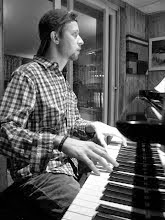
My photo
Montreal, Quebec, Canada

Sunday, May 16, 2010

Guest post: James Danderfer

James is a great clarinetists and composer from Vancouver who we've been lucky enough to get in Montreal for a couple of years while he completes his masters degree from McGill. Check out his music at www.JamesDanderfer.com

Here's his post in response to my assignment (read my original post here: "The Jazz Wars")


Moving on, let me give a quick shout out to all the over-thinkers out there! If thinking about shit was a job, we’d all be making bank in over-time. But it’s not, and unless you have a somewhat 9-5 job to distract you then may just be thinking about much too much all at once. Probably nothing brilliant mind you, just… thoughts.
Anyways, that’s where I’m at these days,…over-thinking. And everything ties into something else, such as,…hmm, I don’t know,… let’s say your friend is releasing an electroacoustic EP pretty soon. Well that person starts thinking about how to release the EP (digital download cards vs. CDs, free streaming albums vs. sound bites) but first he’s gotta work out lots of details with his yet to be created record label, and then he thinks about the CD release show which should line-up with the CD release but he doesn’t know how on Earth to perform this music live!… etc, etc.
And then I get a request to think about and comment on this YouTube video of Jason Marsalis(jazz drummer extraordinaire and proponent of traditional jazz values). Why would anyone bother to do this you ask?
The request came from a great jazz pianist (and blog enthusiast) Josh Rager. Now Josh, if you’re reading this, let me just say; I love giving my opinion on anything, the problem isI’m an over-thinker who will think about it, and think about it, and waste more time and think,… until I can come up with THE answer, only there is no definitive answer so my mind will just run around in circles! It’s infuriating,. Okay?… I mean seriously!
So allow me to simplify my opinion on the view which Jason expressed. He believes that institutionalized jazz has lost touch with humanity and students no longer appreciate the value of playing for audiences but instead have learned only to play for themselves or other musicians.
First of all, I hope this guy has a sense of humour because I found the video kinda hilarious. Jason’s poorly edited, Cronkite-esque barroom sermon about “Jazz Nerds International” which, by the audio/video quality, I’m guessing was delivered to somebody’s old cell-phone camera. … Awesome.
So yeah, on one hand I completely agree, institutionalized jazz music hasn’t placed nearly enough emphasis on the core element of expressing emotion to audiences.
On the other hand, it’s music dude! People should be allowed to do whatever the hell they want to! If some guy wants to play jazz music for himself (possibly in 5/4 too) then let him. There’s nothing wrong with that, it’s art.
If there’s any solution here it’s to be done by better categorizing the many styles of jazz music. I mean, how is it that jazz came to be a cover all term for any kind of music from Louis Armstrong to hip hop to the Doobie Brothers? It is kinda frustrating when audiences go out to hear a jazz show expecting something swinging and end up with some sort of through-composed, intellectual, new music performance,… and vice versa of course. I know what some of you are saying: “Who knows?  Yeah, sure, they might, but they probably won’t; just like when I go to eat at an Italian restaurant I probably don’t want to be surprised with pan-Asian fusion dishes.
I don’t know, is it just me? I love labels and relish the opportunity to express this to any musician who considers themselves far too “open-minded” to have use for such things.  Labels are great, they don’t limit anything, instead they serve as a tool towards identifying someone’s likes and dislikes.  Labels help me find the right section in a library, just like they help me find the right aisle in a grocery store, just like the “list of ingredients” helps me determine whether to choose this jar of pasta sauce or the other.  Why hell, that’s an idea right there! ”Jazz Festivals” (which, in my world, would hereby be called “Music Festivals”) could include an ingredient list next to all “fusion” artists, listed in order of greatest percentage, ie:  The Joe Blow Fusion Collective:  Contemporary European Classical, American Folk, Jazz, Blue Grass.
You see? Somebody looks at that and they can say “You know what, I’m not a big jazz fan but I love American Folk and so I’m going to give Joe Blow a chance.” Likewise, they won’t leave Joe Blows show saying “Wow, I kinda thought jazz was more swinging. I guess jazz isn’t my thing.”
OK, I’m done thinking about this. Josh, I hope that was worthwhile, keep up the blogs!

Monday, May 10, 2010

Guest post: Vanessa Rodrigues

I over-lapped student careers at McGill with Vanessa by a couple of years. When she first arrived in Montreal as an impressionable 17 year old pianist I remember being very impressed by her killing latin chops. I bugged her to show me montunos in the practise rooms because nobody else had any of that language together. Since her days as a student Vanessa has gone on to lead some very successful groups of her own as well as become a highly sought after B-3 organist with an international reputation. Vanessa wrote me a very eloquent statement in response to my Jason Marsalis assignment. (See my original post here)


re: Jason Marsalis rant at the Rex ...

I am always very interested to hear a Marsalis' take on things; there was a time when I thought Wynton was a stodgy, crusty old purist, stuck in a rut and bitter about it. However, the more I learn about jazz and jazz history, the more I can appreciate his point of view and the more, I have to say, I agree with him.

Think about where the Marsalis family is from ... New Orleans, the cradle of American musical culture and birthplace of what is almost certainly America's greatest contribution to art on the world stage.  We look back through the history of jazz with rose coloured glasses, especially now that it's no longer "the devil's music", and has now been institutionalized, systematized, accepted as an academic field of study, and dare I say it, somehow sanitized in the process as well.  Early jazz  was thought of by the white upper class as low-life brothel and gambling hall music that the undesirables (read "blacks") partook in, and it ultimately took Europeans to recognize and nurture this incredible emerging art form.  (Germans Alfred Lion & Francis Wolff launched Blue Note Records). Wynton was around to see his fellow African Americans press on through unimaginable hardship and win their civil rights, only to have the image of his culture be reduced to the vapid glorification of black on black violence, to the benefit of Big Entertainment Corp.

Some of the most romanticized, revered figures in jazz history that we admire today were often victims of police brutality and racial profiling, debilitating drug addictions and a host of other problems affecting mostly the poor and down-trodden. (Billie Holiday, Charlie Parker and Bud Powell come to mind). If we look farther back in history to the blues, the original roots of jazz and all African American music (and by extension rock & roll and pop music), we see that it is the mournful cry of an oppressed people who also had hope and a sense of humour to see them through; there is such a rich pallette of emotions in the blues, the songs tell incredible stories of suffering and despair, love & laughter ... to call yourself a jazz musician and shrug off the blues as being old and tired is like calling yourself an Italian chef and deciding that tomatoes and olive oil are boring and passé and are going to cook with something newer and more exciting. You have removed a key element of the essence of what it IS, one of the main things that makes people fall in love with it, and it ceases to be what you say it is if you do that.

I'm not saying that in order to be considered jazz it can only be Cotton Tail played like Ben Webster plays it, but what I am saying is that for it to be meaningful, the history, and therefore the melodies, rhythms and phrasing, have to be respected and built-upon. It's a language. All languages evolve by building on what came before. Nobody speaks Latin anymore, but anybody who speaks French, Italian, Spanish, Portuguese or Romanian can read, understand and appreciate Latin, and through that gain some insight and respect for the history and lives of the people who spoke it while experiencing the constant evolution of their own languages in modern times.

Jason talks about melody and communicating/connecting with the audience, and I'm absolutely with him on this. Like a spoken word performance (stand-up comedy comes to mind), it's not what you say, but how you say it; it's about HOW you deliver your story using the common language, and there is NO limit to the creative possibilities involved. Take the ending of Bye Bye Blackbird from "God Bless Jug and Sonny" - Sonny Stitt and Gene Ammons ... they quote pretty much every tune under the sun during the endless turnaround and the exchange between them gets more and more exciting, more and more energetic, comical, engaging, and dare I say it, orgasmic! They are using this rich vocabulary of timeless melodies and songs and interweaving it in such a brilliant way ... I can't imagine anyone who claims to love or play jazz not being affected deeply by this.

Now, after all is said and done, I can't say I agree completely with Jason's rant, (though I think it's hilarious and he's totally within his right to say all of those things) in that I believe because the very spirit of jazz is one of growth, progress and exploration, that there is a place for complex meters and chromatic, cerebral improvisation. (Small digression - odd meters can groove like crazy if they're approached in a natural, organic way - ex. Soulive's "One in 7").  That being said, while I can appreciate the particular area of jazz Jason is referring to, it certainly doesn't move and shake me personally the way a hard-swinging take on an old standard tune steeped in emotion and history does.

So I suppose I'm with Jason 99% :)


Aside from being an active perfomer Vanessa also writes (very well I might add) her own blog:


Check out Vanessa's upcoming shows and especially her perennial jam session during the jazz festival:

Vanessa Rodrigues Soul Project - this Friday, May 14 @ Brutopia (main stage)
Vanessa Rodrigues - keys
Olivier Rene-de-Cotret - guitar
Jean-Pierre Levesque - drums
DJ Killa-Jewel - turntables
MC BluRum13 - rap/vocals

Jazz organ jam session (I'm sharing hosting with Martin K. Petersen's
trio) - Monday June 28 - Tuesday July 6 inclusive, 10:30pm every
night, Brutopia, lower lounge floor

Gale/Rodrigues Group Montreal Jazz Festival - Upstairs jazz club -
Monday July 5 (time TBA)
Chris Gale - saxophones
Vanessa Rodrigues - Hammond B-3 organ
Mike Rud - guitar
Davide DiRenzo - drums


Sunday, May 9, 2010

Guest Post: Allan McLean

Here is the first in a series (I hope) of Montreal musicians weighing in. I've known Al for about 15 years since our days at McGill. He's a giant human being as well as saxophonist. I'll never forget the monster solo he took next to Donny McCaslin at the Ottawa Jazz festival turning all the heads in the Maria Schneider orchestra. He's definitely someone who needs to be heard more from outside our tiny jazz community in Montreal. Here's his reaction to the Jason Marsalis video (Please see previous post)

There is a large number of potential jazz listeners in the world.  However, there is a small number of current jazz listeners in the world, and that number is shrinking.  It's not the audience's fault.  An all-too-large percentage of the groups I hear, many of which are very well promoted, are staffed with assorted musicians in an introverted state of self-denile, believing that it's possible to be 'fast-tracked' to 'world-class' musicianship.  Jazz is very hard and there are no shortcuts.  Every musician needs to start at the beginning, and by the way there is no end.  Coltrane didn't build a huge skyscraper by fabricating the penthouse first.  The better your control over the basic materials- counterpoint(bebop), and rhythm, the more you can help the AUDIENCE understand what you want to express with your music.   You would be suprised how many laymen recognize bullshit when they hear it.
You can see Al live and in person in his various musical groups:

Al McLean Quartet feat:

Brian Hurley-Bass
Michel Berthiaume- Drums
Andre White- Piano


Saturday, May 15, 2010 at 9:30pm
Jazz in the Point
Taverne Urbaine Le Diable à Quatre
1871 rue Centre
Montreal, QC


And:

The Chateauguay Tenors!

Cameron Wallis and Al McLean-  All saxophones
Geoff Lapp- Piano
Remi-Jean Leblanc- Bass
Rich Irwin- Drums

May 28th and 29th
Upstairs Jazz Bar and Grille
1254 Rue Mackay
Montreal, QC H3G 2H4
(514) 931-6808

The Jazz wars are back on

Oh it's on. In one corner are the hipsters of modernity. Those who seek to find their own voices by striking out on their own, often claiming that Jazz has become stifled. Jazz has lost its spark and energy due to the repetition of old styles and approaches. In the other corner are the preservationists. Those who are asking us not to throw away what is timeless about good music. Those who are asking us to ponder the importance of playing in 11/8 when 4/4 still just feels better. And the rest of us...somewhere in between. Please consider the passionate war cry of Jason Marsalis and leave your own comment:

Tuesday, March 30, 2010

Solo Piano

No ranting. No wordy pronouncements. This time some actual music. In response to some people who have asked me to post something on composition I decided that I could leak something from one of my own practice tapes. Lately I've recorded myself practicing just to try to get a better look at my technique.

This is an excerpt of a piece entitled "Separation" which is part of a solo piano song cycle. In this piece a basic ostinato rhythm is played between the two hands while a simple melody is kept in the upper voice. One of the challenges playing the piano is to balance the dynamics of different melodies simultaneously almost like your hands become a live real-time mixer. J.S. Bach didn't think it was possible. Some days I agree with him! I know the video sucks a bit. I'll try to use a higher resolution next time. But anyway enjoy....

Monday, March 22, 2010

The Cultural Significance of jazz

Last summer before my performance at the Ottawa Jazz Festival a journalist asked me a series of "get-in-your-head" questions. One of them was "what gives you the chills?". My answer at the time was snakes but I'd like to officially change that now to "Discussing the cultural significance of jazz". Don't you just wish you could get in my head?

I think I should say out-right that I find this topic both pertinent and stimulating. I also find it completely irrelevant to my own processes artistically. And this is what gives me the chills I guess. It is difficult for me to reconcile what seems to be an important discussion with an undeniably intense desire to eschew it. But then again I didn't grow up poor or black in a society that is still trying to cope with social injustice. However neither did any of the bloggers I've read who have weighed-in on this topic. In fact I've found the discussion to take a particularly "ivory-towered" and academic twist. Chills again. In light of the recent posts in blog-o-land I thought I'd give my two cents here

Recently the prolific blogger Jason Parker wrote"
"As jazz musicians, this is a central issue that we have to struggle with." 
"... I do think it’s imperative that we try to connect our music to our own culture, our own experience of the world, our own lives. This is what makes the music of the 50’s and 60’s so powerful, that it was speaking directly to the issues of the day. But when we play that music now, however skillfully we may play it, isn’t it still referencing a bygone era? It’s the reason Miles Davis stopped playing the music that made him famous. It’s the reason Coltrane experimented with different song forms and extended group improvisations. And it’s the reason that cats like Dave HollandEsperanza Spalding,Christian Scott and Aaron Parks are trying to fuse the music of our time with various jazz aesthetics."
To be fair to Jason he quickly distances himself from the notion that we need to completely separate from the musical language of the past (bebop for example) in order for us to achieve that "fusion of the music of our time with various jazz aesthetics". However Jason neither references his explanation of Miles' and Coltranes' artistic decisions nor does he try to articulate what specifically are those "jazz aesthetics" that are somehow nearly inextricably linked to the past, implying that whatever those aesthetics are they are have lost relevance to our modern age unless they become fused to something new.

I find this to be a very popularly espoused sentiment that the great jazz music of the past was knowingly created to reflect the social, political etc issues of it's day.  In our mind's eye it is a quaint image to equate the movement in the 40's and 50's to legitimize jazz music as an art form by young, well-dressed black men with the social rights movements. In the case of Miles he made it clear in many instances that social rights were on his mind. In his autobiography he talks about listening to white bands as a youth and trying to figure out what he could play that would go over well with white audiences (Yes he was a self-professed sell-out!). Several of Miles' recordings are direct references to black figures such as his soundtrack for the documentary on Jack Johnson or of the black community on On the Corner. However Miles was also very concerned with fashion, fast cars, and women. In fact Miles was greatly influenced by a lot of things in society. To speak specifically to his music part of his concept (not that he ever admitted this) was to play mind-games with his band. It was his way of keeping everyone guessing, keeping the music moving forward at any cost even if it meant sometimes a train wreck of form (check out how lost everyone is at times on the album Nefertiti). His artistic intentions always had tangible results if not always pleasant ones. Miles could never sit still musically and needed to reinvent himself every decade. Could we really say that these kinds of artistic decisions were a result of society changing around Miles? Or perhaps did Miles play a role in affecting that change in society? If he did base his musical decisions on notions of social relevance what does that actually mean in musical terms? The thing is that Miles had so many influences, both politically and artistically that it is almost banal to try and make a connection between his deconstruction of the melodic line until he left painful amounts of space with the social rights movement. Yes it's fun but there is no evidence for it.

I guess the point that I'm trying to make (with some difficulty) is that at a certain point the argument breaks down. It breaks down because as we get closer to the actual brass tacks of how a musician expresses themselves the more it makes sense to use the vocabulary of music and aesthetics. It becomes almost insulting to a great musician such as Coltrane or Miles that the reason they reinvented themselves was for external reasons rather than as a result of their own internal processes. And in the broader context of history I believe that the great artists are social leaders and not followers. The proof is that their social relevance usually waxes and wanes even within their own lifetime. For example J.S. Bach although employed throughout his lifetime was ultimately rejected as being too erudite, too dissonant for public consumption. It wasn't until the 19th Century that his influence didn't start to creep back into the music of composers such as Berlioz.

Another artist whose work is inextricably linked to society is Picasso. In his painting Guernica his goal was to explicitly affect social change by drawing the public's attention to the bombing of the city Guerninca by the Germans and Italians during the Spanish civil war. Picasso's pain is felt as mankind's suffering throughout the ages. But the pain we feel is the result of the internal artistic processes of Picasso and not his political motivations. His pain is communicated to us not by a political desire but rather as a result of his skills as a painter and the depth of his artistry. We are moved in other words by the art and not Picasso's intentions as a man, noble as they were. As men Picasso and Miles Davis did some ignoble things too and these in no way have ever become a detriment to my enjoyment of their art. 

This begs the question: why are we bloggers, musicians,....just about everyone so concerned with the social relevance of jazz? Are we really just trying to bybass the tired old discussions of aesthetics? I think we are sometimes struggling to intelligently address the merit of jazz music on it's own terms, using the vocabulary of music. For example if a piece is original or derivative, melodic, rhythmic etc...Then we could talk about jazz that is and isn't accessible to a wide audience. It could all just be a part of a spectrum, one that we can acknowledge will change as the decades pass. To me it is all very pretentious when I hear a musician go into the social significance of their music. Perhaps you don't agree with me but let me ask you this: Do the extended liner note essays on theWynton Marsalis album covers discussing the cultural significance of the "blues" really make the music mean more? When Christian Scott goes on about how he's trying to bring jazz to "the people" in comparison with Bob Dylan are we supposed to take that to mean we should listen to his music any differently than we would someone who isn't trying to bring jazz to the people using idiomatically obscure influences? Actually I'm not sure if his aesthetic appreciation of Bob Dylan's music doesn't have more to do with the album covers than the music.


Hmmm....It seems to me that music which makes it a goal to be accessible to as wide an audience as possible has existed for quite some time. Why is Christian Scott so excited about that?

Ok so let me bow-out as gracefully as possible. Jazz musicians are basically lamenting the sad fact that ours is an art form largely ignored by the public. On the surface it seems plausible that this is because Jazz has lost its connection to society, its greater cultural significance. It seems that all of the goodies Jazz has to offer in terms of melody, harmony, swing feel, and personality pretty much goes over like a lead balloon. But I don't feel that this fact burdens me with the responsibility of trying to make jazz appeal to my culture. We live in a society that is helplessly inarticulate and aesthetically confused and we need to address that without becoming harsh or judgemental. I believe that art is one of the best ways to affect social change. We live in a time and place when a talented and accomplished person is no longer considered very entertaining performing music on an instrument. Wynton Marsalis (despite what I said above about his pretentious album covers) is actually a great ambassador for jazz because of the time he spends with young people demonstrating the music on his instrument. Granted, public performance is an artform and one that jazz musicians cannot disregard. But to say that we should try to fuse jazz aesthetics with the music of our time (does that mean popular music?) in order for us to make jazz popular again is to pay a great disservice to the process of creating art. A process that involves a deep personal commitment to oneself to listen to that "voice" inside at all costs. It is just as disingenuous for a pianist to decide to play Bjork tunes in a jazz piano trio context because they think it will have an audience as it is for that pianist to perform Bill Evans transcriptions in public. If our career aspirations become a hinderance to the creation of our art then we don't stand a chance of making a contribution.

Thursday, February 4, 2010

On the art of hair growth

Recently a piano student of mine emailed me for some encouragement. He asked me "I was wondering what you do when you don't like the way you sound on the piano?" This is definitively a question that most students have but few dare to ask. It's a good question for several reasons the most important of which I believe is that it goes to the heart of the reason why a musician makes music. It also says a lot about this student's attention to the process of becoming an accomplished musician. 

There is a paradoxical nature to the pursuit of educating one's self to be a creative musician. When we're young many of us look at great jazz musicians and assume that the mind-blowing, creative sounds coming out of their instruments are being created entirely in the moment. Jazz, when it's really happening is so spontaneous, exciting, and off-the-cuff that it seems as if it is literally bursting out of the air molecules. For me the sign of maturity in a developing player is when they give up trying to be completely breath-takingly in the moment and develop an appreciation for the craft of being a musician. They begin to distill their creative musical ideas and work them over and over again refining both their ideas and the execution of their ideas.  At this level of artistic evolution a student looks up to their mentors not only as "geniuses" but also as craftsmen (craftspeople?) and develops an appreciation for the refinement and taste that exudes in their playing. However the pursuit of the craft of music inevitably takes us through the thoroughfares of drudgery.  The hours of practicing some very non-creative things as a way of unlocking our creativity seems paradoxical and it becomes easy to lose the energy and inspiration that initially was driven by this perceived spontaneity.

Acquiring the skills of a master can take a lot longer than we had initially hoped. Our practicing can seem even futile. It's almost as if we got up every day, stood in front of the mirror and tried to "will" our hair to grow. This would be a depressing way of growing one's hair and yet for many students (myself included) it becomes part of our process of developing our skills as a musician. It would be silly for any of us to obsessively wish we were at a different hair-length since worrying about it would have no effect on the process that is already occurring at its own rate. (incidentally we all grow hair at different speeds!) Hair length is also neither good nor bad. It's just shorter or longer. This is the same for our development as musicians. We are all developing at our own rates and it only serves to inhibit our development to use our limited energy judging ourselves. 

Once when I took a lesson with Fred Hersch I asked a similar question to him. I don't remember exactly the words I used but I intimated the sentiment that I was often over-whelmed by the prospects of playing solo piano. Fred's answer was: "When you're playing music use what you know, not what you don't know". Over-simplistic as it seems this answer is profound because it requires one to be completely honest about what one "knows". This honesty is, in my experience, not very common and is what distinguishes the wheat from the chaff in terms of artistic integrity. Artistic intentions become quite transparent when it is clear that a musician is playing something that they don't grasp. It's innocent I know but it has the overall effect on the listener as music that is trying to be something that it is not; music that is perhaps trying to impress the listener by approximating something else rather than being simple and honest and what it is.  

Younger players are often mired in judgmental decisions about the "hipness" of what they play. In the case of my student I find it heartening that he is perhaps beginning to dig deeper for a meaning to what he plays. As long as this feeling doesn't turn into obsessive self-loathing this question is an acknowledgment of the deeper sometimes darker places within that must be faced with courage and honesty as part of the process of becoming a musician.