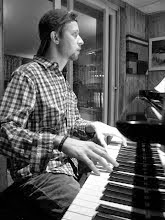
Recently I was having a discussion with a younger bassist about a gig we played a few months ago. I was focusing primarily on my enjoyment of playing music that night. Just to update those of you reading this blog I have 2 young children and a demanding day gig teaching at McGill University and Vanier College. Needless to say I feel like someone who is always making the food but rarely gets to taste it if you catch my drift. A good day for me is when I can get even an minimal amount of practicing in before I need to clean up, give baths, read bedtime stories. All the stuff I really love to do as a parent. Anyway my young bassist friend was focusing the conversation primarily on the mistakes. And in particular those instances where I played certain chord changes that were unfamiliar to him and there were moments that clashed between the chord I was playing and the bass note. These sorts of things often crop up in inter-generational moments like when a younger musician is playing a standard with an older musician. They often just know different chord progressions to the tunes because they've had different teachers for the music.
For example several of the standards I know I learned from recordings of Miles Davis and in particular the 60's quintet with one of my big heros Herbie Hancock. For sure as a student I would always be looking for places to put my favorite Herbie-isms. Here is one that I always wanted to do on "All of You" by Cole Porter. Check out the decending dominant sus chords in measures 13-16 of the form:
I'm sure if you're a jazz pianist this passage absolutely makes your eyes water with envy for Herbie's moment of superlative slickness. Well the whole solo is just about as great a herbie solo as it comes. It was even transcribed by Bill Dobbins in his seminal publication of Herbie Hancock solos published by Advance Music.(Just as an aside: a couple of years back I bought the box set "Miles Davis: Seven Steps to Heaven" and found to my utter amazement that the Herbies solos from these live concerts with the band that included George Colleman were heavily edited to remove entire choruses. When I heard these missing choruses put back into the solos it was like going to going to sleep and waking up in some kind of paralell universe like Bizzarro jazz world in the DC comics if that ever were to have been imagined. The previous Youtube clip plays the recording with the solo restored and not what was on the original cd)
Ok so I got the chance to play with Dave Young, veteran Toronto bassist, a number of years back and here's what those bars sounded like:
In Burrell's version this passage is:
EbMaj7 (Db7) Gmin7(b5) C7(b9) Fmin7 Bb7
which more closely resembles the original changes to the tune as opposed to the Miles/Herbie chords which are:
Eb7sus D7sus Db7sus C7sus B7 EMaj7
In jazz it is quite common for different musicians to play the same tune with even far greater differences than these and make them work. In my opinion the question is not whether or not these differences constitute "mistakes" when played together but rather the question is how do these players play what amounts to unrehearsed repertoire and make it sound so "right". The first question is phrased in the negative, glass-half-empty approach (which I find a surprising number of musicians are willing to take) and the second question is phrased in a positive, glass-half-full, how-do-we-make-this-thing-work approach.
I suppose the analogy I often use for my students is when we hang with our friends socially. In this context we are constantly using language to express and riff off completely unrehearsed ideas. Someone brings up a concert they recently attended, an episode of "Curb your enthusiasm" (nerd!), gossip about a gig they were on. All of these "ideas" existed internally as emotions and concepts that needed a language for them to be expressed. These ideas also needed an audience or an interactive human outlet for them to be "performed". During their performance they grow to include influences from the subtle emotional subtext of the "hang". Things like the vibe in the room which is often humourous. Or maybe the subtext involes an inter-generational vibe like when we're with family. The point is that there is so much that goes into the expression of ideas through language.
The only mistake we can make in these situations is to not be completely present. Humans are just naturally sensitive to each other but we sometimes do things that get in the way. We feel insecure about ourselves and so we start an internal negative dialogue that has nothing to do with anything external. We use drugs that dull our minds. Music only sounds wrong when this sensitive exchange between people isn't happening. Yes understanding of language is a very important part and so is the quality of our ideas (typically you don't hang out with your friends to bore them with mundane ideas) but so is an attitude of open mindedness and a willingness to listen and respond honestly to one another. Possibly THE greatest thing about jazz and improvisation is that it rellies on conventions and languages that are the best at representing the subtlety of complex human interaction. The only time it sounds bad (not Shaft bad but yucky bad) is when that interplay isn't there. All the right notes in the world won't change a band that isn't happening!

Wednesday, November 30, 2011

Tuesday, November 29, 2011
Notes on Kananaskis
This is the second video in the series shot by Randy Cole here in Montreal documenting me and the trio. Once again Cole's artistry as a film maker is apparent as well as my inability to form complete sentences when interviewed. Also featured is the superb musicianship of my friends Dave Watts and John Fraboni who I've had the pleasure of playing with and being inspired by for a number of years now. I hope that some of our nice chemistry comes through on film despite my banter. Enjoy...
Friday, November 25, 2011
Candian Landscapes
Hi all. In conjunction with the release of my second cd entitled "Kannaskis" here is a little video of one of the tunes from the album called "Separation". The film was shot by a Montreal film maker named Randy Cole who, among other projects, has a really nice developing series of profiles of Montreal jazz musicians. I especially like the films he did of Kevin Dean and Al McLean. The piece I'm playing here was composed for my brother and sister-in-law after they experienced a painful loss however the metaphor extends to include the separation between the urban and natural environments here in Canada. I hope you enjoy it.
Tuesday, November 15, 2011
Post Secondary Education: a purely politcal post
For those of you who read my blog you know about my increasingly sporadic posts. You've read my meandering theses on various topics relating to jazz education. You've been patient with me while I self-promoted, you've been open minded when I've ranted, you've been like a friend when I've gushed about my family. I'd now like to take the next step outside of the sphere of jazz education and write something briefly on education itself.
Here in Quebe where I live and work we are witnessing the beginning of the end of state funded post secondary education. Up until now we've literally been the most enlightened society in North America by subsidizing the greatest portion of university tuition than any other province in Canada or State in the US. This is something that I am unflinchingly proud of and I will gumb you down if you try to argue with me about this. I simply can't believe those people who argue against the benefit of post secondary education to society at large. Their arguments seem trite to me, similar to those arguments people make against society's responsibilities towards the rearing of children and young adults. Simply because those making the argument themselves have no children they feel that this should absolve them from playing a role in the shaping of the human beings they share the planet with and whose future financial, emotional, and intellectual contributions will be of great benefit to them when they require care in their old age.
I would like to take 2 arguements that are being thrown out against subsidized post secondary education by everyone from my neighbours to high profile economists and argue against them.
#1. is the argument that university education is primarily a personal choice that benefits the student only.
This is in essence a consumeristic attitude toward higher education and an argument recently articulated by an economist in the Montreal Gazette. There is more to highter education than mere personal choice or self-improvement. Nor is subsidizing tuition a mere investment in an individual's future income. Education does indeed improve the student, but it also produces graduates who are better able to contribute to the development of society at large. Society benefits from doctors, lawyers (supposed to, maybe I should say in Canada at least) engineers, philanthropist business leaders, theologans, ethicists, chemists, physicists, musicians, artists.....even economists!
#2 the argument that free education produces inferior education, citing the claim that "no German university is ranked among the best in the world," and suggesting that this is because most German states offer free university.
Setting aside the veracity of the claim, perhaps the authors of this argument could explain how Oxford and Cambridge managed to become such world reknowned universities in spite of the fact that, until recently, Britain also offered free higher education. McGill university itself is considered the top university in Canada and yet has one of the lowest tuitions. A policy offering low-cost or free higher education is a choice that many enlightened societies have made because they understand that it is an investment, not just in the individuals who receive that education, but in the ongoing development of of society as a whole.
This is a choice that the Quebec society made years ago. The trouble is that successive governments have not lived up to their side of the bargain by funding the universities adequately. And now the problem with Quebec universities is not that they charge such low fees, but that they receive inadequate support from the very governments that have set the low-fee policy. This paints an inaccurate picture of the issue for people. What is in the public's best interest is to push hard against the government to live up to the values and expectations of society, but instead people are adopting the values of cutting back on education. Cuts that themselves represent merely the values of a government who is doing everything it can to make up for bad policy and corruption in other sectors.
Here in Quebe where I live and work we are witnessing the beginning of the end of state funded post secondary education. Up until now we've literally been the most enlightened society in North America by subsidizing the greatest portion of university tuition than any other province in Canada or State in the US. This is something that I am unflinchingly proud of and I will gumb you down if you try to argue with me about this. I simply can't believe those people who argue against the benefit of post secondary education to society at large. Their arguments seem trite to me, similar to those arguments people make against society's responsibilities towards the rearing of children and young adults. Simply because those making the argument themselves have no children they feel that this should absolve them from playing a role in the shaping of the human beings they share the planet with and whose future financial, emotional, and intellectual contributions will be of great benefit to them when they require care in their old age.
I would like to take 2 arguements that are being thrown out against subsidized post secondary education by everyone from my neighbours to high profile economists and argue against them.
#1. is the argument that university education is primarily a personal choice that benefits the student only.
This is in essence a consumeristic attitude toward higher education and an argument recently articulated by an economist in the Montreal Gazette. There is more to highter education than mere personal choice or self-improvement. Nor is subsidizing tuition a mere investment in an individual's future income. Education does indeed improve the student, but it also produces graduates who are better able to contribute to the development of society at large. Society benefits from doctors, lawyers (supposed to, maybe I should say in Canada at least) engineers, philanthropist business leaders, theologans, ethicists, chemists, physicists, musicians, artists.....even economists!
#2 the argument that free education produces inferior education, citing the claim that "no German university is ranked among the best in the world," and suggesting that this is because most German states offer free university.
Setting aside the veracity of the claim, perhaps the authors of this argument could explain how Oxford and Cambridge managed to become such world reknowned universities in spite of the fact that, until recently, Britain also offered free higher education. McGill university itself is considered the top university in Canada and yet has one of the lowest tuitions. A policy offering low-cost or free higher education is a choice that many enlightened societies have made because they understand that it is an investment, not just in the individuals who receive that education, but in the ongoing development of of society as a whole.
This is a choice that the Quebec society made years ago. The trouble is that successive governments have not lived up to their side of the bargain by funding the universities adequately. And now the problem with Quebec universities is not that they charge such low fees, but that they receive inadequate support from the very governments that have set the low-fee policy. This paints an inaccurate picture of the issue for people. What is in the public's best interest is to push hard against the government to live up to the values and expectations of society, but instead people are adopting the values of cutting back on education. Cuts that themselves represent merely the values of a government who is doing everything it can to make up for bad policy and corruption in other sectors.
Wednesday, October 19, 2011
Kananaskis | Effendi Records :
Hi guys. Given my last post I thought it would be nice to put up a link to preview my upcoming disc. Feel free to leave a message and let me know if I've inadvertently stumbled on any marketable hooks!
Kananaskis Effendi Records :
 |
| "9 out of 10 people say Josh's playing grates!" |
Kananaskis Effendi Records :
Hooked on jazz?
I recently had the pleasure of attending the new season launch for my record label here in Montreal, Effendi Records. I am releasing a new CD next month which entitled me to a couple of free drinks and some face time with the media. Or should I say whoever showed up claiming to be a reporter of any kind. Since the free drinks were also flowing for the media representatives I was a little dubious of some of the characters I was rubbing shoulders with. There was even a person who showed obviously intoxicated who got served. But isn't that what's great about a Montreal jazz community shindig: "All are invited" and in Quebec it doesn't undermine anyone's credibility to be drunk at the beginning of the show.
All kidding aside I had an interesting conversation with a radio host who gave me his perspective on releasing a CD in today's over-saturated market of recordings and what made him want to listen to something new. As we chatted on the patio of Upstairs I enjoyed his frankness while at the same time feeling disappointed by the message: Novelty! He was tired of seeing a barrage of white-faced jazz pianists putting out boutique recordings that all sound the same to him. He wanted to feel a story behind the artist, something that he could think about while listening to the music. And the cd needed to have a concept. It couldn't just be a bunch of tunes (like mine will be when it comes out next month!). A cd now needs to have a theme. As an example he offered Marsalis' partnering with Eric Clapton. Or Bill Frisel's new record of the music of John Lenon. Basically there needed to be a marketing angle, or if you will a hook.
Apparently without these things nothing will stand out on it's own. As disappointed as I was I had to agree with him. Distinguishing characteristics aside, the race card is really important to the white middle-class because it does tell a story. A very interesting one. It's a story about humans overcoming inequity, rising up in a system that is angled against the poorer classes. It's a story that includes flavours from different cultures. White people in this situation want to cheer for the underdog while at the same time enjoying the contrast of cultures. When I attend ticketed events at jazz festivals it is this white middle class I see in the overwhelming majority. I can't help but feel that part of the charm of watching a non-white musician from a poor country (all playing aside) is the good feeling that it generates while diminishing a smidgen of guilt.
But to address the music itself, the message from not just the media but club owners and promoters at large festivals is that you need to have a hook. And this is where the novelty of innovation plays a prominent role. People want to hear something they have never heard before. It can be forgettable, it can be bad, but it must be new! It must be immediately accessible and digestible apparently to those who are pondering the "story" of the musicians themselves while they listen to the music. On this subject I came across a great quote from one of my favorite pianists Mulgrew Miller from a downbeat interview:
"A lot of people do what a friend of mine calls "interview music," [Miller said]. You do something that's obviously different, and you get the interviews and a certain amount of attention. Jazz is part progressive art and part folk art, and I've observed it to be heavily critiqued who attribute progressivity to music that lacks a folk element. When Charlie Parker developed his great conception, the folk element was the same as Lester Young and the blues shouters before him. Even when Ornette Coleman and John Coltrane played their conceptions, the folk element was intact. But now, people almost get applauded if they don't include that in their expression. If I reflected a heavy involvement in Arnold Schoenberg or some other ultra-modern composers, then I would be viewed differently than I am. Guys who do what I am doing are viewed as passé."
I can't think of a musician more respected by other musicians (I mean count the records that Mulgrew plays on as a sideman!) and more overlooked by the media, promoters of festivals etc. But knowing that his playing is so great makes me wonder if the media should play a different role in the music industry. While my conversation with the radio host exemplifies only one viewpoint it still evokes questions in my mind about the buffer zone of media and information content that we wrap ourselves in. Is it really working out for us if it prevents musicians like Mulgrew Miller from being heard? I mean I know none of my students at McGill have heard of him (I've asked) and yet he is so disproportionally represented on the jazz recordings of the last 20 years. The pianists that my students have heard about are extremely young and have barely appeared on a handful of records but exemplify today's earth shattering new sounds in jazz. I guess it begs the question: what will happen to them when they grow up and play better and more maturely than they do today? Will we get a chance to hear them in the future once they've changed the game?
All kidding aside I had an interesting conversation with a radio host who gave me his perspective on releasing a CD in today's over-saturated market of recordings and what made him want to listen to something new. As we chatted on the patio of Upstairs I enjoyed his frankness while at the same time feeling disappointed by the message: Novelty! He was tired of seeing a barrage of white-faced jazz pianists putting out boutique recordings that all sound the same to him. He wanted to feel a story behind the artist, something that he could think about while listening to the music. And the cd needed to have a concept. It couldn't just be a bunch of tunes (like mine will be when it comes out next month!). A cd now needs to have a theme. As an example he offered Marsalis' partnering with Eric Clapton. Or Bill Frisel's new record of the music of John Lenon. Basically there needed to be a marketing angle, or if you will a hook.
Apparently without these things nothing will stand out on it's own. As disappointed as I was I had to agree with him. Distinguishing characteristics aside, the race card is really important to the white middle-class because it does tell a story. A very interesting one. It's a story about humans overcoming inequity, rising up in a system that is angled against the poorer classes. It's a story that includes flavours from different cultures. White people in this situation want to cheer for the underdog while at the same time enjoying the contrast of cultures. When I attend ticketed events at jazz festivals it is this white middle class I see in the overwhelming majority. I can't help but feel that part of the charm of watching a non-white musician from a poor country (all playing aside) is the good feeling that it generates while diminishing a smidgen of guilt.
But to address the music itself, the message from not just the media but club owners and promoters at large festivals is that you need to have a hook. And this is where the novelty of innovation plays a prominent role. People want to hear something they have never heard before. It can be forgettable, it can be bad, but it must be new! It must be immediately accessible and digestible apparently to those who are pondering the "story" of the musicians themselves while they listen to the music. On this subject I came across a great quote from one of my favorite pianists Mulgrew Miller from a downbeat interview:
 |
| Pictured: Mulgrew Miller NOT performing Bjork's "All Neon Like" |
I can't think of a musician more respected by other musicians (I mean count the records that Mulgrew plays on as a sideman!) and more overlooked by the media, promoters of festivals etc. But knowing that his playing is so great makes me wonder if the media should play a different role in the music industry. While my conversation with the radio host exemplifies only one viewpoint it still evokes questions in my mind about the buffer zone of media and information content that we wrap ourselves in. Is it really working out for us if it prevents musicians like Mulgrew Miller from being heard? I mean I know none of my students at McGill have heard of him (I've asked) and yet he is so disproportionally represented on the jazz recordings of the last 20 years. The pianists that my students have heard about are extremely young and have barely appeared on a handful of records but exemplify today's earth shattering new sounds in jazz. I guess it begs the question: what will happen to them when they grow up and play better and more maturely than they do today? Will we get a chance to hear them in the future once they've changed the game?
Saturday, October 1, 2011
It Goes to Credibility Part II
So I thought it would be time for me to put my money where my...fingers on the laptop are and offer a positive spin on some of the things I said in the first post on this subject. In retrospect my tone was a little negative, and I was critical of society and culture. Ok I dipped into some heavy pessimism when I discussed what in our culture represented an admirable level of credibility on an artistic level. I don't try to be negative. Maybe I just needed a coffee or something.
Well here's a musician who has yet to really be discovered. While we continue to get inundated by singers who deliver dreary ballad-based repertoire with clenched mouths and vacant expressions, packaged in the blandest of generic musical settings and who are clearly being rammed down our throats by the ubiquitousness of their images in the media, here is an example of someone who is well deserved of our attention.
I've been aware of Champian Fulton only for a few months and have yet to see her perform but I sincerely hope someone, somewhere in the world of corporate jazz takes notice of her. Here's a little taste for you. Enjoy!
You know what, I'm not even finished talking about her. I just watched this again and I'm really blown away. She has an enormous sense of swing, poise at the piano, and a phrasing that is already, at the age of 27, coming together for her. For me her credibility as a musician stems from her ability to elevate a standard tune to an artistic level while at the same time having fun with the music. One really needs to believe in this music in order to do that. They really need to be breathing it and not just performing standards as "covers". The feeling for me is one of hearing a performance of a standard tune and having that song sound as if I've never heard it before and I'm falling in love with it for the first time. And let's face it for most of these tunes at this point one might argue that we have more reason to hate them than to love them given the accumulation of shmaltzy, mediocre performances we have of them.
I'm just so heartened by how real and honest this concert sounds. Here's another video.
Well here's a musician who has yet to really be discovered. While we continue to get inundated by singers who deliver dreary ballad-based repertoire with clenched mouths and vacant expressions, packaged in the blandest of generic musical settings and who are clearly being rammed down our throats by the ubiquitousness of their images in the media, here is an example of someone who is well deserved of our attention.
I've been aware of Champian Fulton only for a few months and have yet to see her perform but I sincerely hope someone, somewhere in the world of corporate jazz takes notice of her. Here's a little taste for you. Enjoy!
You know what, I'm not even finished talking about her. I just watched this again and I'm really blown away. She has an enormous sense of swing, poise at the piano, and a phrasing that is already, at the age of 27, coming together for her. For me her credibility as a musician stems from her ability to elevate a standard tune to an artistic level while at the same time having fun with the music. One really needs to believe in this music in order to do that. They really need to be breathing it and not just performing standards as "covers". The feeling for me is one of hearing a performance of a standard tune and having that song sound as if I've never heard it before and I'm falling in love with it for the first time. And let's face it for most of these tunes at this point one might argue that we have more reason to hate them than to love them given the accumulation of shmaltzy, mediocre performances we have of them.
I'm just so heartened by how real and honest this concert sounds. Here's another video.
Subscribe to:
Posts (Atom)